Personalized Learning at Home: A Parent's Guide for Grades 3-8
What personalized learning means for grades 3-8, the research behind it, seven proven frameworks, and how to start at home with grade-band tips and FAQ.

Jim Carlson
Co-Founder & Parent
What You'll Learn
What personalized learning actually means and how it differs from one-size-fits-all instruction
What research shows about personalized learning outcomes for grades 3-8
Seven proven educational frameworks that make personalized learning effective
How personalized learning looks different for grades 3-4, 5-6, and 7-8
Practical steps to get started with personalized learning at home
What is personalized learning?
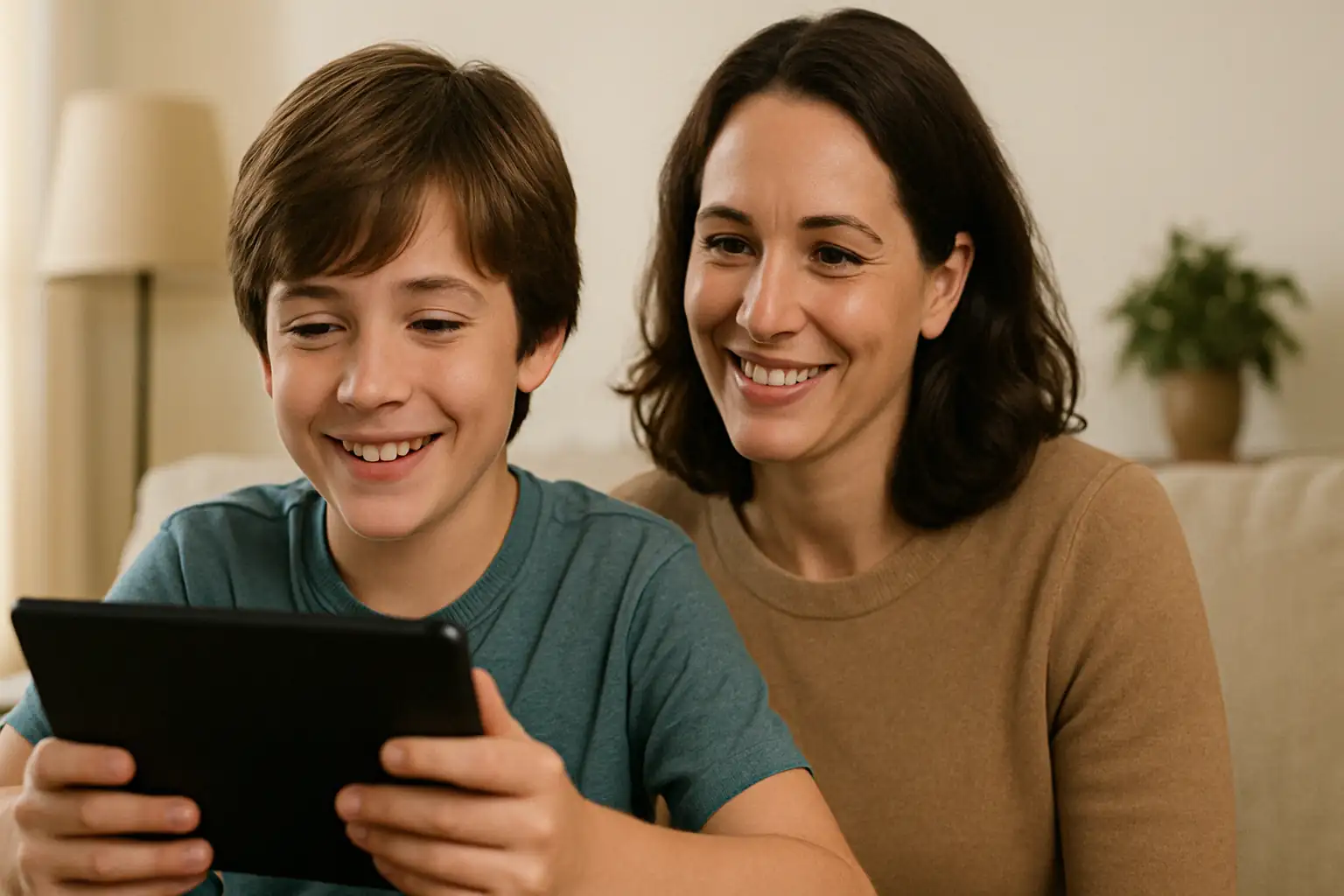
Personalized learning adapts the pace, content, and approach of instruction to each student's current skill level, learning style, and goals. Instead of moving every child through the same material at the same speed, personalized learning at home starts where your child actually is and adjusts as they grow.
This is not a magic algorithm that replaces teachers or sets its own curriculum. It is a structured process that identifies precise strengths and gaps, aligns content to a child's interests so attention lasts longer, adapts practice when a skill is mastered or needs more support, and allows flexible pacing inside clear targets rather than one fixed speed.
How it differs from one-size-fits-all instruction
In a typical classroom, the teacher delivers the same lesson to every student and moves on once most of the class is ready. Students who need more time fall behind; students who are ahead lose engagement. Personalized learning at home closes this gap by letting your child spend more time on concepts they find challenging and move faster through material they already understand.
How to Start Personalized Learning at Home
Starting personalized learning at home comes down to four steps. First, find the gaps: spend a few minutes noticing which homework problems frustrate your child and which come easily, or use a short diagnostic to see exactly where they struggle. Second, pick two or three focus skills to target rather than trying to fix everything at once. Third, run a short daily routine of about 30 to 45 minutes that alternates subjects and ends with a brief reflection on what clicked and what felt hard. Fourth, track progress lightly from week to week and adjust the plan every week or two as your child grows. You do not need a teaching degree, just a clear starting point and a consistent, flexible routine.
What the research says
A large-scale study by RAND Corporation examined 62 schools across 23 charter management organizations that implemented personalized learning practices. The study found statistically significant gains in both math (effect size 0.09-0.16 SD) and reading (0.07-0.11 SD) compared with peers in traditional settings (Pane et al., 2015). Importantly, the strongest results came from blended models where technology supported teachers and parents rather than replacing them.
A meta-analysis of 74 studies on intelligent tutoring systems found that adaptive learning technology produced meaningful learning gains across subjects and age groups, with the largest effects in mathematics (Ma et al., 2014). More recently, the OECD's 2024 review of AI in education confirmed that personalized approaches can narrow achievement gaps when combined with human oversight and regular feedback.
Research on student engagement adds another dimension. Fredricks, Blumenfeld, and Paris (2004) found that cognitive, behavioral, and emotional engagement all increase when students feel that learning activities are relevant to their lives and appropriately challenging — exactly the conditions personalized learning creates.
Seven frameworks that power personalized learning
Effective personalized learning draws on decades of educational research. The following seven frameworks shape how good learning activities are designed, delivered, and adapted. Understanding them helps parents recognize what makes a learning program genuinely personalized rather than just branded that way.
Project-Based Learning (PBL)
Project-Based Learning transforms abstract subjects into tangible challenges that resemble real-life tasks. Students research a specific problem, design creative solutions, and present their work. This method boosts ownership and deepens understanding because learners see the purpose behind what they are studying. At home, a PBL approach might mean your child designs a garden layout using area and perimeter math, or researches a local environmental issue and writes a persuasive letter. Learn more at PBLWorks.
Universal Design for Learning (UDL)
Universal Design for Learning recognizes that every child learns differently. UDL-based activities offer multiple pathways to explore content, engage with materials, and demonstrate mastery. This ensures that every child, regardless of learning style, has equal access to the experience. A math lesson might let one child work with physical manipulatives while another uses a visual diagram and a third solves problems verbally. See CAST's full guidelines at CAST UDL.
Zone of Proximal Development (ZPD)
Vygotsky's Zone of Proximal Development describes the sweet spot between what a child can do independently and what they can do with guidance. Activities set just beyond current ability and supported with hints, prompts, or opportunities for collaboration keep tasks both challenging and attainable. When parents notice a child struggling, they provide just enough scaffolding to keep momentum — then step back as confidence grows (Vygotsky, 1978).
Constructivism
Constructivist learning, rooted in Piaget's research, holds that children build understanding by connecting new concepts with ideas they already know. Rather than passively absorbing information, learners actively test their ideas and revise mental models. At home, this means asking your child to explain how a new math strategy connects to one they already use, or having them teach a concept to a sibling (Piaget, 1952).
Bloom's Taxonomy (Revised)
The revised Bloom's Taxonomy (Anderson and Krathwohl, 2001) organizes cognitive skills from remembering basic facts up through analyzing, evaluating, and creating original work. A well-designed learning plan moves children through these levels over time: first recalling vocabulary, then applying it in context, then using it to create something new. This progression ensures depth rather than surface-level repetition.
Experiential Learning
David Kolb's experiential learning cycle emphasizes a loop of experiencing, reflecting, conceptualizing, and experimenting (Kolb, 1984). In practice, this means a child completes an activity, reflects on what worked, forms a general insight, and then tests that insight on a new problem. Kitchen science experiments, for example, naturally follow this cycle: the child measures, observes, hypothesizes, and tries again.
Social-Emotional Learning (CASEL)
The CASEL framework integrates social-emotional skills — self-awareness, self-management, social awareness, relationship skills, and responsible decision-making — alongside cognitive learning. Reflective prompts, collaborative activities, and confidence-building check-ins help children develop emotional resilience alongside academic skills. Learn more at CASEL.
Personalized learning by grade band
Personalized learning looks different depending on your child's age and development stage. Here is what effective personalized practice typically involves for each grade range.
Grades 3-4: Building foundations
At this stage, children are transitioning from learning to read to reading to learn. Personalized learning focuses on building reading fluency, multiplication and division foundations, basic writing mechanics, and social skills like turn-taking and empathy. Sessions work best at 20-30 minutes with frequent variety — a reading passage followed by a short math puzzle, for example. Interest-driven content matters most here: a child who loves animals will read more willingly about marine biology than about abstract topics.
Grades 5-6: Expanding independence
Upper elementary students can handle longer, more complex tasks and are developing metacognitive skills — the ability to think about their own thinking. Personalized learning shifts toward multi-step problems, analytical reading, paragraph-to-essay writing transitions, and beginning fraction and decimal fluency. Sessions can extend to 30-45 minutes. This is also when self-assessment tools become valuable: children who track their own progress develop stronger study habits for middle school.
Grades 7-8: Preparing for middle school rigor
Middle school introduces subject specialization, longer assignments, and greater expectations for independent work. Personalized learning at this level focuses on pre-algebra and algebra readiness, argumentative and analytical writing, critical reading across genres, and time management skills. Sessions of 45-60 minutes are appropriate, and students benefit from having input into their learning goals. A child preparing for pre-algebra might focus on integer operations one week and proportional reasoning the next, based on diagnostic results rather than a fixed sequence.
Getting started at home
You do not need a teaching degree to personalize your child's learning. Here are practical steps any parent can follow.
Assess where your child is now
Start with a simple assessment of current reading, math, and writing skills. Many free tools exist, including our own grade readiness assessments. The goal is not to label your child but to identify specific strengths and gaps so you can focus practice where it matters most.
Set two to three focus areas
Resist the urge to address everything at once. Pick two or three focus areas based on the assessment — for example, reading comprehension and fraction fluency — and plan activities around those areas for the next two to four weeks.
Build a weekly routine
Set aside a regular time each day for focused practice. Most families find 30-45 minutes works well, leaving plenty of room for free play and relaxation. Alternate between subjects to keep sessions fresh, and include a short reflection at the end: what clicked today, and what felt hard? For a step-by-step approach, see our guide on how to create a personalized lesson plan.
Track progress and adjust
Check in weekly to see what is working. If your child is breezing through math but struggling with reading, shift the balance. If interest is flagging, try connecting the subject to something they care about. The point of personalized learning is that the plan changes as your child grows. Comparing tutoring options to supplement your plan? See how to choose between a tutor, AI, and self-directed learning.
Putting it into practice: three examples
Lego reader (Grade 3): A child with a reading comprehension gap reads a serial story about skyscraper design using Lego engineering vocabulary. Interest drives sustained attention; comprehension questions are woven into the narrative.
Dance dreamer (Grade 5): A child who loves dance builds main idea and summary writing skills through journal prompts that recap famous routines and invite them to script new choreography. Writing feels purposeful rather than arbitrary.
Baseball statistician (Grade 7): A child tackles fraction-to-decimal conversion by tracking batting averages and on-base percentages during league games. Real data makes abstract math concrete and memorable.
For a deeper look at how AI technology powers these personalized experiences, see AI in Education: How Adaptive Learning Helps Kids at Home.
What to do next
Personalized learning works best when it starts from where your child actually is, not where they are supposed to be. The path from here depends on whether you need to identify gaps, build a practice plan, or compare your support options.
Find out where your child stands. A targeted diagnostic is more useful than a generic progress report. Take our free grade readiness assessment to pinpoint specific skill gaps across reading, math, and writing.
Check grade-level expectations. If you are not sure what "ready" looks like for the next school year, our grade readiness skills checklist breaks down the specific skills your child needs by grade band.
Build a focused practice plan. Once you know the gaps, use our step-by-step lesson plan guide to turn two or three focus areas into a weekly routine that fits your family schedule.
Compare your support options. Tutoring, adaptive apps, and self-directed practice each solve different problems. See how to choose between a tutor, AI, and self-directed learning before spending on the wrong option.
The easiest first step is knowing exactly where your child is strong and where the gaps are. Take the free grade readiness assessment — it takes about 20 minutes and gives you a targeted list of skills to focus on.
Tags
References
Continued Progress: Promising Evidence on Personalized Learning. Pane, J. F., Steiner, E. D., Baird, M. D., Hamilton, L. S., & Pane, J. D. (2015). RAND Corporation.
School Engagement: Potential of the Concept, State of the Evidence. Fredricks, J. A., Blumenfeld, P. C., & Paris, A. H. (2004). Review of Educational Research, 74(1), 59-109.
Intelligent Tutoring Systems and Learning Outcomes: A Meta-Analysis. Ma, W., Adesope, O. O., Nesbit, J. C., & Liu, Q. (2014). Journal of Educational Psychology, 106(4), 901-918.
What is PBL?. PBLWorks — Buck Institute for Education.
Universal Design for Learning Guidelines. CAST — Center for Applied Special Technology.
Mind in Society: The Development of Higher Psychological Processes. Vygotsky, L. S. (1978). Harvard University Press.
The Origins of Intelligence in Children. Piaget, J. (1952). International Universities Press.
A Taxonomy for Learning, Teaching, and Assessing: A Revision of Bloom's Taxonomy. Anderson, L. W., & Krathwohl, D. R. (Eds.) (2001). Pearson.
Experiential Learning: Experience as the Source of Learning and Development. Kolb, D. A. (1984). Prentice Hall.
Fundamentals of SEL. CASEL — Collaborative for Academic, Social, and Emotional Learning.
Why Don't Students Like School?. Willingham, D. T. (2009). Jossey-Bass.
About Jim Carlson
Jim Carlson is the co-founder and CEO of Kaizly. A former marketing and technology executive and parent of three, he created Kaizly to help families support their children's learning and growth at home.
Related Articles
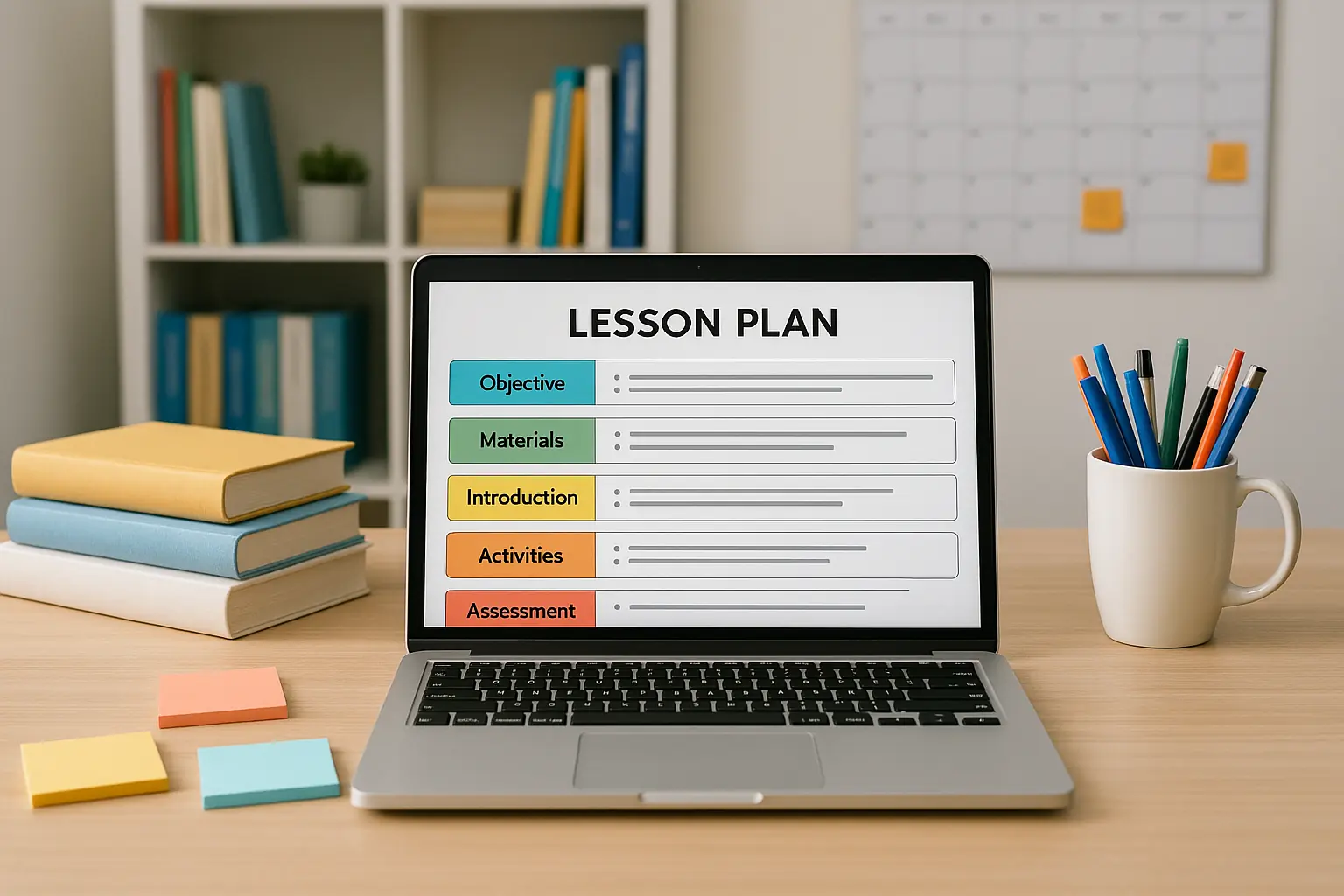
How to Create a Personalized Lesson Plan for Your Child
Step-by-step guide to building a personalized lesson plan for grades 3-8.
Read Article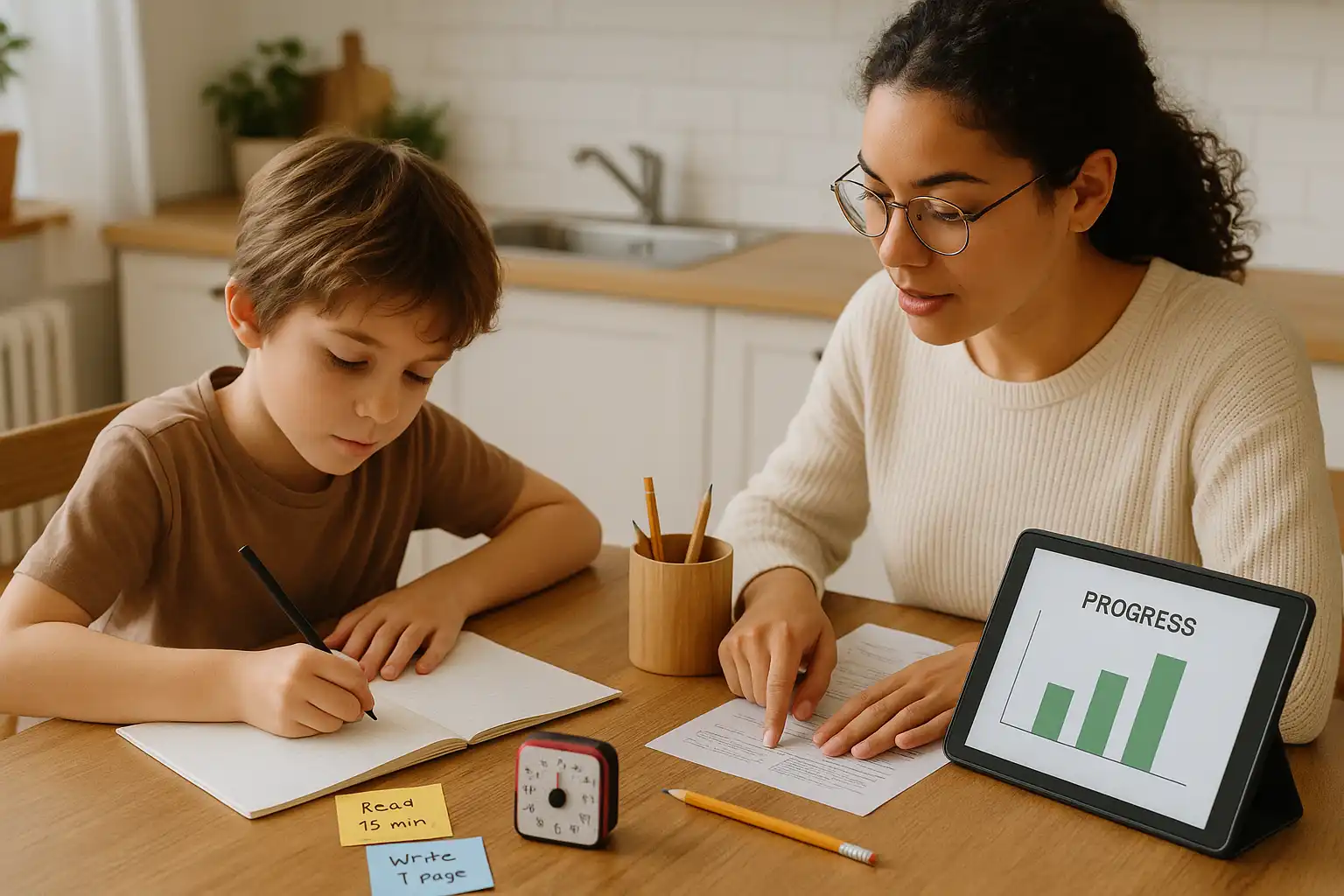
Tutor vs. AI vs. Self-Directed: How to Choose Learning Support
Compare human tutors, AI platforms, and self-directed practice to find the right fit.
Read Article
Grade Readiness Skills Checklist: What Your Child Needs
Grade-by-grade checklist of reading, math, writing, and SEL skills for grades 3-8.
Read ArticleShare this article