Free Grade Readiness Assessments for Grades 3-8
Free grade readiness assessments for grades 3-8. Research shows students lose one month of skills each summer. Find gaps in 25-40 minutes with a full parent answer key.

Lindsay Carlson
Parent & Education Contributor

A free grade readiness assessment is a 25-to-40-minute diagnostic that checks whether your child has the reading, writing, math, science, and social studies skills needed for their next grade level. Kaizly's assessments cover grades 3 through 8, come with a full parent answer key and explanations, and require no account or cost. If your child spent the summer away from structured learning, this is the quickest way to see where they stand before school starts.
This page is your starting point for taking action. Pick your child's grade below to begin the assessment, or read on to learn why a quick readiness check matters and how to use the results. If you're looking for a broader overview of what grade readiness means and how to prepare over time, see our guide to preparing for the next grade.
TL;DR: Students lose roughly one month of grade-level skills each summer (Cooper et al., 1996). A free readiness assessment takes 25-40 minutes, covers 5 subjects for grades 3-8, and comes with a parent answer key and targeted practice recommendations. No account or cost required.
What You'll Learn
How much learning kids typically lose over summer and why a quick diagnostic check is worth a half hour of your time
What each grade-level assessment covers, from 3rd grade reading fluency through 8th grade algebraic reasoning, with a comparison table so you can see the skills at a glance
How to read the results and turn them into a focused plan for the weeks before school starts, whether your child aced it or needs targeted practice
What Is a Grade Readiness Assessment?
A grade readiness assessment is a short diagnostic check that measures whether a child has mastered the key skills needed for their next grade level. It covers core subjects, takes 25 to 40 minutes, and gives parents a clear picture of strengths and gaps before the 2026–27 school year starts.
These aren't standardized tests. There's no pass or fail. Think of it more like a checkup at the doctor: you find out what's strong, what needs attention, and you walk away with a plan. Kaizly's free assessments are built around the foundational skills that overlap across Common Core, TEKS, SOLs, and other major state frameworks, so they work regardless of which state you're in.
Why Does Summer Learning Loss Matter?
Cooper et al.'s 1996 review of 39 studies found that students lose roughly one month of grade-level skills over summer break, with math hit harder than reading (Review of Educational Research). The loss is larger in math than in reading, averaging roughly one tenth of a standard deviation overall.
That might sound small for one summer. But it's cumulative. NWEA researchers analyzing MAP Growth data from 3.4 million students confirmed that the students who gained the most during the school year tended to lose the most over summer (Kuhfeld, 2019). NWEA's more recent 2024 analysis confirms the same pattern. Over several years, a child who never recovers those losses can fall one to two grade levels behind.
For younger students, the stakes are especially high. The Annie E. Casey Foundation's "Double Jeopardy" study found that children who aren't proficient readers by the end of third grade are four times more likely to not graduate from high school on time (Annie E. Casey Foundation, 2011). A quick readiness check won't fix that on its own, but it tells you exactly where to focus.
How Do These Free Assessments Work?
Each assessment covers five subjects: reading, writing, math, science, and social studies. Your child answers 21 to 24 grade-appropriate questions that reflect the key concepts from their previous year. The whole thing takes about 25 to 40 minutes depending on the grade level.
What Happens After Your Child Finishes
Every assessment comes with a Parent Answer Sheet at the back. It doesn't just hand you a number: every question includes the correct answer, a short explanation of the skill it checks, and a hint you can offer if your child gets stuck. Each subject then closes with specific recommendations for three situations - needs improvement, approaching ready, and ready or above - so you walk away with next steps, not just a score. For example, if your 5th grader is solid in reading but rusty on fractions, you'll know exactly what to practice first.
No Account, No Cost
The assessments are completely free. You can pull them up on a tablet or print the PDF. No login, no credit card, no email required. We built them this way because we think every parent deserves to know where their child stands.
What Skills Does Each Grade Assessment Cover?
Each assessment is tailored to the specific expectations for that grade. Here's a breakdown of the core focus areas:
| Grade | Reading & Writing | Math | Science & Social Studies | Time |
|---|---|---|---|---|
| 3rd | Reading fluency, main idea, short paragraphs | Addition/subtraction to 100, intro to multiplication | Basic life science, community roles | ~25 min |
| 4th | Multi-paragraph comprehension, opinion writing | Multi-digit multiplication, fractions intro | Earth science, state history | ~30 min |
| 5th | Informational text analysis, evidence-based writing | Fraction operations, decimals, volume | Physical science, early U.S. history | ~30 min |
| 6th | Literary analysis, argumentative writing intro | Ratios, rates, intro to expressions | Earth systems, world geography | ~35 min |
| 7th | Cross-text comparison, research-based writing | Proportional reasoning, geometry basics | Life science, civics fundamentals | ~35 min |
| 8th | Rhetorical analysis, synthesis writing | Linear equations, functions, Pythagorean theorem | Physical science, U.S. history through Reconstruction | ~40 min |
The skill focus at each level is informed by Common Core State Standards and the most common state frameworks (TEKS, SOLs, Next Generation Science Standards). We've zeroed in on the foundational skills that show up across nearly all of them.
Find Your Child's Grade-Level Assessment
Pick the grade your child is entering. Each assessment includes a parent-friendly answer key, explanations for every question, and recommendations for closing any gaps you find.
3rd Grade Readiness Assessment - Reading fluency, basic math facts, short writing
4th Grade Readiness Assessment - Multi-paragraph reading, multiplication, opinion writing
5th Grade Readiness Assessment - Informational text, fractions and decimals, evidence-based writing
6th Grade Readiness Assessment - Literary analysis, ratios, argumentative writing
7th Grade Readiness Assessment - Cross-text analysis, proportional reasoning, research writing
8th Grade Readiness Assessment - Rhetorical analysis, linear equations, synthesis writing
Download the Free Assessment PDFs (Grades 3-8)
Prefer to jump straight to the printables? Each 2026-edition PDF includes the full assessment plus the Parent Answer Sheet with explanations for every question and per-subject recommendations:
How to Use Your Child's Results
The results aren't a report card. They're a starting point. Here's how to get the most from them:
Review the scored results by subject area. Look at which subjects are strong and which have gaps. The feedback highlights specific skill areas, not just overall scores.
Identify the one or two weakest skill areas. Trying to fix everything at once doesn't work. Pick the biggest gaps and focus there first.
Start 15-20 minutes of daily targeted practice. Use the answer key's practice suggestions for the specific skills that need work. For math gaps, hands-on activities tend to work better than worksheets. Our fractions routine using kitchen math is a good example. For reading, research shows a strong link between daily reading time and reading achievement (Anderson, Wilson & Fielding, 1988). Our daily reading routine guide has a practical setup.
Re-assess after two to three weeks. In our experience, 15 to 20 minutes of targeted daily practice can help close many summer gaps within a few weeks. Run the assessment again to measure improvement and decide if more practice is needed.
If your child scored well across the board, that's great. The skills from last year stuck. You might still see one or two soft spots worth a few minutes of daily practice, but overall your child is ready. If you want to keep the momentum going, Kaizly's personalized learning plans can build on their strengths with activities matched to their interests.
How Are These Different from Standardized Tests?
Parents often wonder how a readiness assessment compares to the standardized tests their child takes at school. Here's a side-by-side breakdown:
| Feature | Readiness Assessment | Standardized Test |
|---|---|---|
| Time | 25-40 minutes | 2-4 hours |
| Cost | Free | School-administered |
| Feedback speed | Immediate (parent answer key) | Weeks to months |
| Stakes | Low — parent tool only | Goes on official record |
| Setting | Home, any device | School, proctored |
| Purpose | Identify gaps before school starts | Accountability and progress tracking |
The short version: a readiness assessment is a quick, low-stakes diagnostic you do at home. It's a tool for you, the parent, to see where things stand and take action before the year begins. If you're looking for more context on how standardized testing fits into the bigger picture, we have a separate guide on understanding standard testing.
How Accurate Are Free Readiness Assessments?
Kaizly's readiness assessments are aligned to Common Core State Standards, TEKS, SOLs, and Next Generation Science Standards. They focus on the foundational skills that appear across nearly all state curricula for grades 3 through 8. That means the skills being tested are the same ones your child's teacher expects them to know.
That said, these are diagnostic tools, not predictive ones. They tell you where your child stands right now on core skills. They don't predict how your child will perform on a specific state test or in a specific classroom. Think of them as a snapshot: accurate for identifying current strengths and gaps, useful for targeting practice, but not a substitute for the detailed assessment a teacher does over the course of a school year.
When Is the Best Time to Use a Readiness Assessment?
The most common time is late summer, two to four weeks before school starts. That gives you enough time to identify gaps and work on them before day one. But these assessments work at several points during the year:
Mid-July gives you the most runway if you're concerned about the summer slide. Four to six weeks of targeted practice can make a real difference.
Early August works if you're a last-minute planner. Even one to two weeks of focused daily practice on the biggest gaps can help.
After winter break is a good mid-year check. Skills can slip over a two-week break, especially in math.
End of school year works as a baseline to see where your child finished and which skills are strongest heading into summer.
What Comes After the Assessment?
The assessment gives you a starting point. Kaizly can help in two ways: build an ongoing learning plan, or make a custom worksheet for a skill your child is working on. Your free trial includes 3 custom printable worksheets; Premium and Family include up to three a day per child.
Want a printable practice sheet for one skill? See custom worksheet plans.
Whether you use Kaizly or not, the readiness assessment itself gives you what most parents don't have heading into the 2026-27 school year: clarity. You'll know exactly where your child stands and what to do about it. That's worth 25 to 40 minutes.
Found a gap? Pick your child's grade and make a practice worksheet.
Tags
References
The Effects of Summer Vacation on Achievement Test Scores: A Narrative and Meta-Analytic Review. Cooper, H., Nye, B., Charlton, K., Lindsay, J., & Greathouse, S. (1996). Review of Educational Research, 66(3), 227-268.
Surprising New Evidence on Summer Learning Loss. Kuhfeld, M. (2019). Phi Delta Kappan, 101(1), 25-29. Based on NWEA MAP Growth data from 3.4 million students.
Double Jeopardy: How Third-Grade Reading Skills and Poverty Influence High School Graduation. Hernandez, D.J. (2011). Annie E. Casey Foundation.
Growth in Reading and How Children Spend Their Time Outside of School. Anderson, R.C., Wilson, P.T., & Fielding, L.G. (1988). Reading Research Quarterly, 23(3), 285-303.
Common Core State Standards Initiative. National Governors Association Center for Best Practices & Council of Chief State School Officers (2010).
About Lindsay Carlson
Lindsay Carlson is a mom of three in elementary school in Dallas, TX. She writes about practical ways families can support their kids' learning at home.
Related Articles

3rd Grade Readiness Assessment
Free 25-minute assessment for rising third graders covering reading fluency, basic math, and writing skills.
Read Article
4th Grade Readiness Assessment
Free assessment for rising fourth graders covering multi-paragraph reading, multiplication, and opinion writing.
Read Article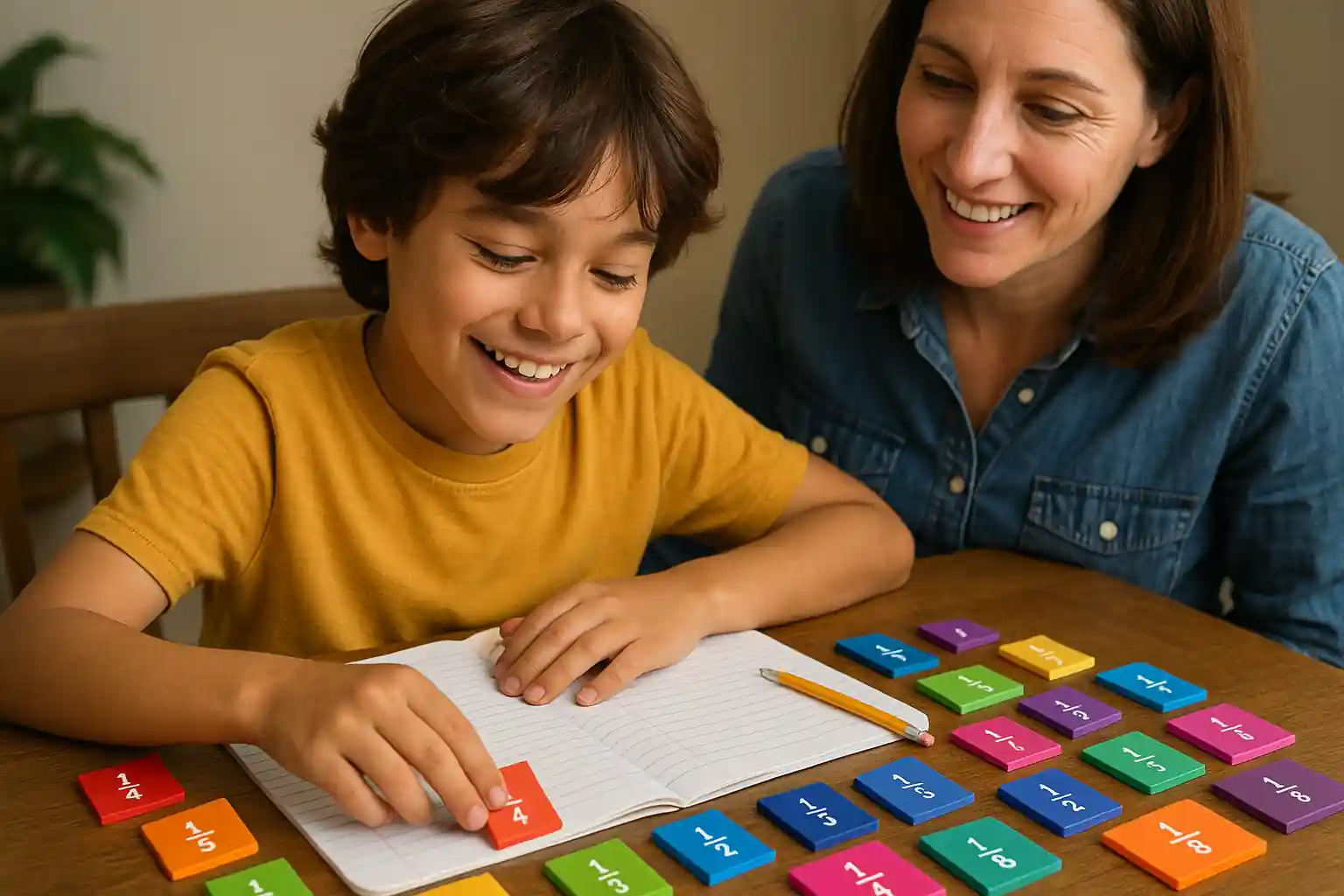
5th Grade Readiness Assessment
Free assessment for rising fifth graders covering informational text, fractions, decimals, and evidence-based writing.
Read Article
6th Grade Readiness Assessment
Free assessment for rising sixth graders covering literary analysis, ratios, and argumentative writing.
Read Article
7th Grade Readiness Assessment
Free assessment for rising seventh graders covering cross-text analysis, proportional reasoning, and research writing.
Read Article
8th Grade Readiness Assessment
Free assessment for rising eighth graders covering rhetorical analysis, linear equations, and synthesis writing.
Read Article
8th Grade Screener: What It Is & How to Read Results
What an 8th grade screener measures, how it differs from the state test, and how to read benchmark results without over-interpreting a single score.
Read ArticleShare this article