5th Grade Readiness: Free Assessment & Guide for Rising Fifth Graders
Prepare your child for 5th grade with our free readiness assessment. Check their skills in fractions, reading comprehension, writing, and science. Includes answer key, tips, and a roadmap for a confident start to fifth grade!

Lindsay Carlson
Mom of 3 in Dallas, TX
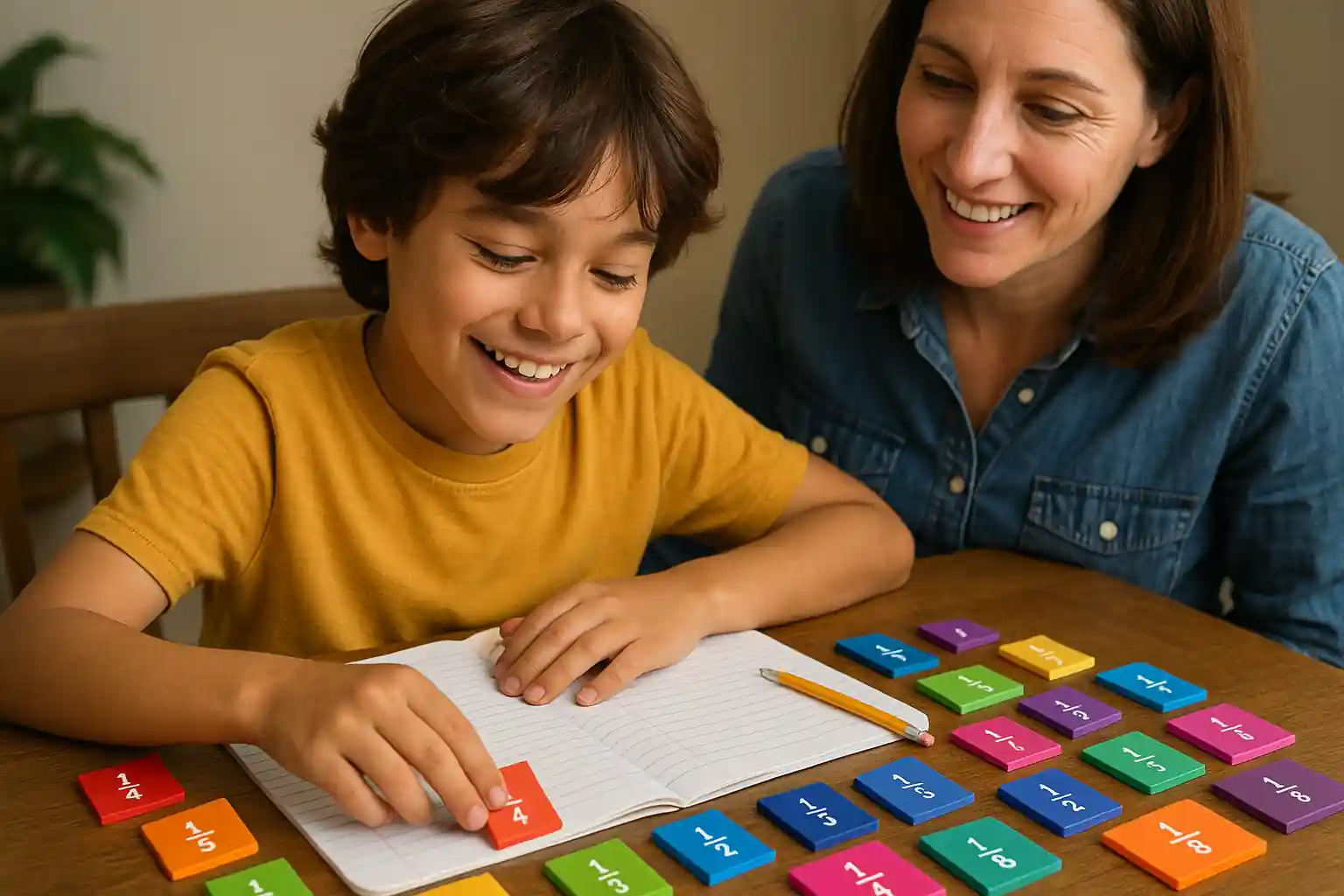
Fifth grade is almost here! It's the final year of elementary school in many districts, and you might be asking yourself, "Is my child ready to be a fifth grader?" Maybe you've heard about the fractions challenge or seen your child's eyes glaze over at the mention of a history project. Fear not: we're here to help you get a clear answer before that first day. Our Free 5th Grade Readiness Assessment is a quick, comprehensive check that will show you exactly where your rising fifth grader stands in all the key subjects. In about 20 minutes, you'll know what's solid and what might need a little summer touch-up.
Why 5th Grade is a Foundation Year
Fifth grade is often considered a "make sure the foundation is solid" year because come 6th grade, many kids will be off to middle school, where the pace picks up. Fifth grade is like the grand finale of elementary – it pulls together everything learned so far and sets the stage for higher-level stuff. By the end of 5th, students are expected to have a really firm grasp on fractions and decimals. These are the building blocks of middle school math (hello, algebra down the road). Education experts say that a solid grasp of elementary math facts by grades 4–5 (like multiplication tables and fractions) is essential groundwork for later algebra.
Fifth graders also delve deeper into reading and writing: they'll be reading more complex texts (maybe "chapter books" have turned into full-on novels now) and writing multi-paragraph essays or reports. You might see your child writing about the causes of the American Revolution or explaining a science experiment in detail. Speaking of science, 5th grade often covers cool topics like the human body, basic physics (ever heard of experiments with gravity or magnetism?), and inquiry skills (making hypotheses, conducting experiments). Social studies could range from U.S. history to world geography basics.
5th Grade Readiness Checklist: Essential Skills
So what should a rising fifth grader know or be able to do at this point? Here's a quick 5th grade readiness checklist:
Reading & Analysis: Can your child handle a slightly longer nonfiction article or story and pick out key points? By now, they should be comfortable with chapter books and be able to identify themes or the author's message in a story. If given a short article (say, about an animal or a famous person), they should grasp the main idea and a couple of supporting facts. Also, they should be able to look back at the text to find answers (4th grade usually introduces quoting or referencing text evidence). Being able to compare two texts in a simple way is a plus, since 5th grade often has them compare and contrast information from different sources.
Writing: By the end of 4th grade, most kids have written a basic essay or two. A rising fifth grader should be able to write a multi-paragraph piece. For example, an opinion essay about "Should kids have homework?" might have an introduction stating their opinion, a few paragraphs each with a reason and examples, and a conclusion. They should know how to use basic transition words (first, next, for example, in conclusion). Grammar-wise, can they consistently use correct capitalization, punctuation, and fix run-on sentences? Their writing should show clear organization and logical flow.
Math – Fractions & Decimals: This is the big one for math. A rising fifth grader should know how to add and subtract fractions with like denominators (like 1/4 + 2/4) and understand what fractions represent. They should also be comfortable with basic decimals (tenths and hundredths place) and adding/subtracting those. They should also have their multiplication/division facts down pat (at least up to 10x10, if not 12x12). If 7 × 8 still requires fingers or a long pause, that's worth extra practice, because 5th grade math will assume those facts are second nature.
Problem Solving & Critical Thinking: Can they solve a multi-step word problem that involves, say, both addition and multiplication? For instance, "There are 3 boxes with 24 apples each. If 18 apples are bad, how many good apples are left?" A rising fifth grader should be able to break that down: find total apples (3 × 24) then subtract 18. An increasing emphasis is on explaining answers ("How did you get that?" ). It's wonderful if your child can verbalize their thought process.
Science & Curiosity: By now, your child likely did some basic science experiments. A rising fifth grader should grasp the scientific method basics: the idea of forming a hypothesis, testing one variable at a time, and drawing a simple conclusion. Content-wise, a typical 5th grader knows things like different systems of the human body (respiratory, digestive – at a basic level), maybe the concept of gravity, states of matter, etc.
Social Studies & General Knowledge: Rising fifth graders often have studied their state's history or U.S. history up to a point. Key things they might know: the basics of how the U.S. was founded (Declaration of Independence 1776), the concept of three branches of government (legislative makes laws, etc.), and basic geography (can they find continents on a map? Name the country's capital?).
Reading through this list, you might think, "That's a lot of stuff!" And it is – kids learn an amazing amount by the end of 4th grade. The purpose of our 5th Grade Readiness Assessment is to see how much of that knowledge stuck, and what might need a refresher.
How Our Free Assessment Works
We crafted the 5th grade readiness check to specifically zoom in on those crucial skills like fractions, reading comprehension, and critical thinking. It's roughly 20 minutes worth of questions (maybe a bit more if your child likes to think things through slowly, which is fine). There's a short reading passage with a couple of questions to gauge comprehension, a few math problems (expect to see some fractions and multi-digit operations), one short writing prompt, and a sprinkling of science/social studies questions.
What sets this apart from looking at last year's report card? Instant insight and guidance. When you download the assessment, you're also getting the answer key and our recommendations. For each question, we explain not just the answer, but why it matters. We'll tell you what it means if your child got it wrong and give a practical tip to help them improve.
Don't underestimate the confidence boost this can give your child. Fifth graders are the "seniors" of elementary – it's a year where they often take on more leadership and responsibility. Feeling confident academically can help them step into that role with pride. Imagine the smile on your child's face when the teacher introduces a concept and they think, "Oh, I remember this! We practiced it." That familiarity reduces anxiety and sets a positive tone for learning.
Download Your Free 5th Grade Assessment
Ready to get started? Click the button below to download your complete assessment package:
Includes: Complete assessment + Answer key + Skill explanations + Practice recommendations
This is a quick, free assessment designed to reflect a national average; your child's school performance level and individual abilities may vary. When using the Kaizly online platform, we strive to quickly hone in on your child's abilities and challenge them at the right level using direct answers.
Making the Most of the Assessment
Print it out or open it on your computer/tablet. When your child is in a good mood (and not hungry or tired), invite them to give it a try. Some parents make it into a fun challenge: "Hey, I found this cool 5th grade quiz. Let's see how many you can get right!" Keep it casual – no need to simulate a strict test environment. If they want to chat through a thought, listen. If they say "I don't know this one," encourage them to give their best guess or reasoning.
Afterward, go through the answers together. This is where the roadmap unfolds. For each missed question, discuss the explanation. Make a little plan: maybe pick 2–3 areas max to focus on in the next couple of weeks. You don't want to overwhelm them (or yourself!). Just identify the key gaps. Often, a short daily review (even 10 minutes on each target area) for a week or two can significantly help.
Remember to celebrate the strengths too! If the assessment shows they're great at reading comprehension or crushed the vocabulary question, give them props: "Wow, you remembered so many details from that story – your reading skills are sharp!" This will make them more receptive when you address the areas for improvement.
By the time school starts, you'll have turned those question marks into a clear action list. No more lying awake at night wondering, "Can my kid handle 5th grade math?" – you'll know, and you'll have already started helping them along.
Ready for a Great School Year?
The tips and insights from this readiness check are just the beginning. With Kaizly, you get a personalized learning plan that adapts to your child's unique needs, turning insights into action. Start a free trial today and see how our real-time coaching can help your child start the school year with confidence.
FAQ: 5th Grade Readiness
The assessment has a question my child couldn't answer because they never learned that topic. Is the test inaccurate?
Our readiness assessments aim to cover what most schools include by 4th grade. However, every curriculum has its quirks. It's possible your child's class didn't get to a particular topic. If you hit a question like that, don't worry – it doesn't mean your child isn't "ready," it just means that content might be new to them in 5th. Use it as a preview opportunity: "Looks like you'll learn about XYZ this year. Let's find a quick video about it so you'll already know something!" A "wrong" answer in such cases isn't a weakness, just a note that this will be new learning. The answer guide often notes if a question is a stretch/bonus that not all 4th graders would know.
Should I time my child when they take the test?
Not necessary. The 5th Grade Readiness Assessment isn't about speed; it's about understanding. Most kids will complete it in about 20 minutes, but some may take 30 or more. If your child is working diligently, let them have the time. However, do pay attention if they labor excessively long on one section – that could indicate uncertainty. Use time as an observational tool, not a strict limit. We want their best, most relaxed performance, so we get a true picture of what they know.
My child didn't do well on the assessment at all. Should I be considering a tutor or repeating 4th grade?
Take a deep breath – in most cases, the answer is "no need for drastic measures." This assessment is a diagnostic tool. If many areas came up weak, it might simply highlight that your child experienced more summer slide than expected. The great thing is you've identified this before 5th grade starts. You have time to work on it. Fifth grade teachers are skilled at catching kids up in the fall; they often review 4th grade concepts at the start. You've got the advantage of a heads-up. Instead of thinking "uh-oh, we're behind," reframe it as "okay, we know what to focus on now." Kids' brains are sponges – sometimes a concept just needs to be explained differently for it to click.
Alright, you're all set to ensure 5th grade starts on a high note. By investing a little time now, you're giving your child the gift of confidence and competence. Here's to your rising fifth grader – may they soar high in the upcoming school year!
5th Grade Preparation Checklist
What to do to get ready for 5th grade:
Create a study schedule and stick to it independently
Practice note-taking from videos or lectures
Learn to break big projects into smaller deadlines
Start checking grades online weekly
Read news articles and discuss main ideas
Set up a charging station for devices
What every 5th grader needs to know:
How to outline a 5-paragraph essay
Long division without a calculator
How to research using multiple sources
Decimal place values through thousandths
How to identify reliable websites
Time management for 20+ minutes of homework
How to respectfully disagree in discussions
What supplies you need for 5th grade:
Multiple subject notebooks (not just one binder)
Graph paper notebook for math
USB drive for digital projects
Agenda/planner they'll actually use
Correction tape (neater than white-out)
Earbuds in a case for computer work
Sticky tabs in multiple colors for organization
Tags
References
Summer Slide (2026). Summer Slide. https://www.scholastic.com/parents/books-and-reading/raise-a-reader-blog/summer-slide.html
Summer Slide Statistics (2026). Summer Slide Statistics. https://www.learner.com/blog/summer-slide-statistics
About Lindsay Carlson
Lindsay Carlson is a mom of three in elementary school. She's passionate about helping families support their kids' learning and growth at home.
Share this article
Kaizly uses cookies
Cookies make our site work properly and securely. By allowing us, you will get the best user experience with brand enriched content & relevant products and services.