Texas TEKS3rd GradeEla

3.6GIdentifying Key Ideas from Details

Comprehension skills · b.6: Comprehension skills: listening, speaking, reading, writing, and thinking using multiple texts. The student uses metacognitive skills to both develop and deepen comprehension of increasingly complex texts. The student is expected to:

Free printable worksheet

Download the 3.6G worksheet

The lesson, the visual models, and 10 practice questions with space to work.

Download the PDF

PDF · 8 pages · answer key · no sign-up

What this standard means: In this lesson, your child will practice finding the big idea in a passage by looking closely at small details. They will read about sea animals, tides, and park workers, then notice which details go together and what they show. Your child will learn that not every detail is the main point, and that the key idea is the one big thought that connects the information. They will compare details from a passage, think about what repeats or belongs together, and explain the main idea in their own words. This helps build strong reading skills for understanding what a text is mostly about.

What the standard says, word for word · §110.5.b.6.G

evaluate details read to determine key ideas
Read it at the source: Texas Education Agency (TEA)

What’s inside

What you get, and who it’s for

Everything below is measured from the actual lesson and the actual file. Nothing here is an estimate.

Time to run
About 25 minutes. 10 min lesson, then 15 min of practice.
In the download
8 printable pages: the full lesson, the worked examples, the visual models, and 10 practice questions with space to work. An educator answer key is included at the end, so the student pages come first and it is still ready to hand out. The lesson’s worked examples do show their solutions, because that is how they teach.
Question set
The download carries all 10 questions. The page shows 10 of them as a sample.
Question format
Every question is multiple choice. Students show their work on the page.
Assumed before this

Students who are shaky on these will struggle with 3.6G. Worth a quick check first.

  • §110.4.b.6.G(Grade 2) Students should first be able to identify important details in a passage and tell which details go together. They also need practice naming a main idea from several related details, not just from one detail alone.
Dates
Published August 12, 2026. Last updated August 14, 2026.

The sample intervention

See a real lesson for 3.6G

A real intervention, not a generic worksheet.

3.6G

Find the Big Idea: Sea Animals and National Parks

Use details from a passage to figure out the key idea.

Each passage below is built from small details. Your job is to notice which details repeat or belong together, then name the one big idea they all point to. A detail that is true but only covers part of the passage is too small to be the key idea.
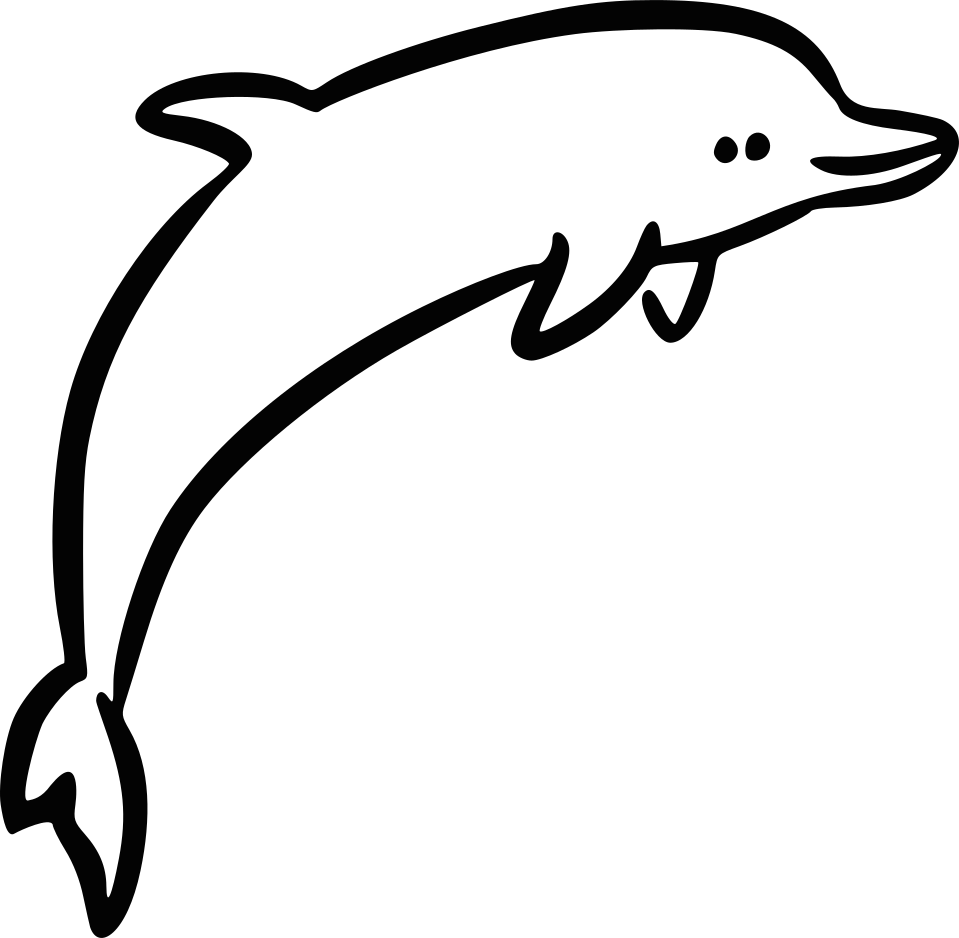
A line drawing of a dolphin leaping out of the water, matching the sea animal topic of the first passage.
Every morning, a small boat slides into a quiet ocean bay. The team on board counts the dolphins that jump near the bow. They watch the seabirds that circle and dive above the water. They also record the tides as the water rises and falls along the shore. Each observation goes into a notebook, page after page. One week, the notes showed something interesting. On mornings when the tide rushed in fast, more birds arrived to feed near the waves. On calm mornings, the dolphins stayed farther from shore. By comparing pages from different days, the team began to see patterns. The dolphins, the seabirds, and the tides were not separate stories. Together, the notes helped the team understand how the animals and the changing water are connected in the bay.
Three details, one big idea
What it shows
They count dolphinsan animal is recorded
They watch seabirdsan animal is recorded
They record the tidesa water change is recorded
Key ideathe team studies animals and water together

Read down the first column. When every detail points the same way, that direction is the key idea.

Worked exampleDetail 1: The team counts dolphins. Detail 2: The team watches seabirds. Detail 3: The team records the tides. All three details are observations of the bay, so the key idea is: the team studies how animals and water changes connect in the bay.
Early in the morning, before most visitors arrive, workers move along the trails of a national park. They pick up trash left near the paths so the walkways stay clear. They fix signs that point hikers the right way so no one gets lost. They also check the fire rings at each campsite to make sure they are safe to use. The jobs do not stop there. On busy days, the workers greet families and answer simple questions. They remind visitors to stay on marked paths and to respect plants and animals. After a storm, they clear fallen branches so hikers do not trip. Before a holiday weekend, they test the water taps at every campsite. Day after day, these small jobs add up, keeping the park clean, safe, and ready for every guest.
Find the details that fit

Three marked details from the park passage. All three are about keeping the park safe and ready.

Worked exampleDetail 1: Workers pick up trash near the paths. Detail 2: Workers fix signs for hikers. Detail 3: Workers check the fire rings. All three details are ways of caring for the park, so the key idea is: park workers keep the park clean, safe, and ready for visitors.
Details that build the key idea

Sort details from each passage into the group they support.

Worked exampleWhen several details point to the same topic, they reveal the key idea. One detail on its own, like 'they fix signs' is true, but it only covers a small piece, so it is too small to be the key idea of the whole passage.

Practice questions

  1. 1

    A team watches a bay each morning. They count dolphins, watch seabirds, and record tides. What is the key idea?

    • The team is watching life in the bay.
    • The team is fishing for dinner.
    • The team is building boats.
    • The team is teaching children to swim.
  2. 2

    Which detail is most important for the key idea in the bay passage?

    • The team hears a loud bell.
    • The team wears shoes on the boat.
    • The team records the tides moving in and out.
    • The team brings a red lunch box.
  3. 3

    Which set of details best shows the big idea in the bay passage?

    • Cars, roads, and houses.
    • Lunch, backpacks, and maps.
    • Sandcastles, shells, and kites.
    • Dolphins, seabirds, and tides.
  4. 4

    A student says the key idea is only about dolphins. What is wrong with that idea?

    • It says the team is indoors all day.
    • It leaves out the seabirds and tides.
    • It says the team is not working.
    • It says the water never changes.
  5. 5

    Which sentence best explains why the team keeps a notebook?

    • To draw pictures of boats for fun.
    • To count how many snacks they eat.
    • To remember the names of fish only.
    • To learn how animals and water changes connect.
  6. 6

    Read this summary: 'Workers greet families, answer questions, and pick up trash.' Which big idea does it support?

    • Workers are helping visitors and caring for the park.
    • Workers are making the park noisy.
    • Workers are planting a zoo.
    • Workers are learning to swim.
  7. 7

    New scene: A ranger walks a trail, fixes a sign, and picks up trash. What is the key idea?

    • The ranger is taking a nap.
    • The ranger is leaving the park.
    • The ranger helps keep the park safe and clean.
    • The ranger is fixing only one sign.
  8. 8

    Which detail does not fit the idea of park workers keeping things safe?

    • They play music all afternoon.
    • They remind visitors to stay on marked paths.
    • They check the fire rings.
    • They fix signs for hikers.
  9. 9

    Two details from the passage are: 'pick up trash' and 'fix signs.' What key idea do they support?

    • The workers are only there for fun.
    • The workers care for the park.
    • The workers are building a new city.
    • The workers are looking for sea animals.
  10. 10

    A student says the park passage is mostly about families. What is the best response?

    • No, because the workers care for the park in many ways.
    • No, because the passage is only about trails.
    • Yes, because the park has no workers.
    • Yes, because families are the only detail.

Part of the question set is shown. Generate the whole intervention, freshly themed and with an answer key, for your own class in the product.

Watch for this

Common mistakes

Detail-Spotting Instead of Big-Idea Thinking: Students often latch onto one interesting detail, like dolphins, families, or fixing signs, and treat it as the main idea. But this skill asks them to group related details and ask what they all show together, such as how animals and tides connect in the bay or how workers keep the park clean, safe, and ready for visitors.

Vocabulary

Key terms

key idea
The big idea that several details point to.
detail
A small fact or piece of information from a passage.
observation
Something a person notices and records.
pattern
A repeated way things happen or seem to go together.

In the classroom

How to use this intervention

Use this worksheet for a short whole-class warm-up during the 10-minute lesson, then have students work independently for the 15-minute practice. If a small group needs support, pull them after the first few questions to model how to sort details from the big idea.

Want this themed to your class instead?

Generate a fresh, standards-aligned intervention like this one, themed to whatever your students are into, in about 2 minutes.

Generate for my class

Questions educators ask

Educator FAQ

What grade is this worksheet for?

This worksheet is for Grade 3.

Which TEKS standard does it align to?

It aligns to TEKS §110.5.b.6.G, evaluating details read to determine key ideas.

Is an answer key included?

Yes, the lesson includes example answers and supported responses for the questions.