Summer Reading Bingo and Family Book Club Ideas for Grades 3-8
Engage kids with Summer Reading Bingo and Family Book Club ideas. Perfect for grades 3-8, blending fun reading challenges with meaningful family discussions.

Lindsay Carlson
Mom of 3 in Dallas, TX
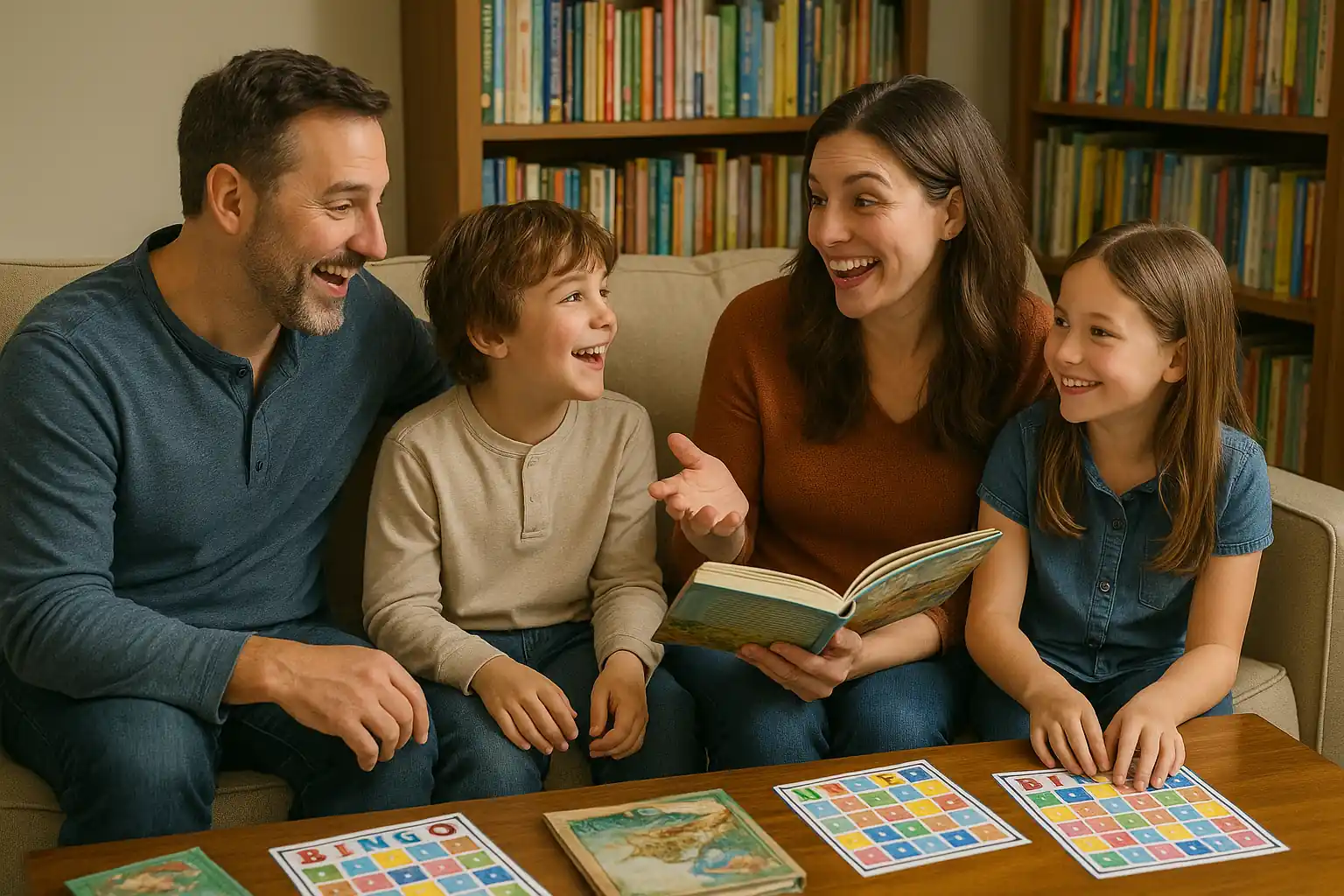
Summer is the perfect time for kids to fall in love with books, yet many parents feel stuck between keeping reading fun and keeping it meaningful. At Kaizly, we turn that pressure into playful progress by matching each child's interests with lively, confidence boosting activities. Below are two proven ways to spark curiosity for grades 3–8:
Summer Reading Bingo Challenge – a game like twist on daily reading
Family Book Club Adventure – a conversation driven journey through a shared story
Quick guide for choosing today
| Reading Bingo Challenge | Family Book Club Adventure | |
|---|---|---|
| Best for kids who | Love variety and quick wins | Enjoy deeper discussion and family time |
| Time needed | Flexible bursts of 10–20 minutes | One to two weeks of reading plus a one hour meeting |
| Parent involvement | Light setup, periodic check ins | Moderate, leads the club and joins discussion |
| Social vibe | Solo play or friendly sibling competition | Collaborative, builds conversation skills |
| Motivation style | Visual progress and small prizes | Shared snacks, themed games, and belonging |
Let your child's mood guide the choice: if they crave independent fun, start with Bingo. If they want cozy connection, gather the family and open a book together.
Activity 1: Summer Reading Bingo Challenge
Overview: Turn reading into a game! Create a Summer Reading Bingo card filled with fun reading-related tasks. Examples: "Read under a tree," "Read a book about space," "Read aloud to a family member," "Finish a nonfiction book," etc. Each time your child completes a task, they mark off that bingo square. The goal is to get a "Bingo" (a full row, column, or diagonal) – or eventually fill the entire card. This challenge injects variety and excitement into daily reading. It works for grades 3–8 because you can tailor the tasks to different reading levels and it encourages exploration of different genres and formats. It's especially helpful for reluctant readers, since breaking reading into quirky mini-challenges makes it feel less like a chore and more like an adventure.
Why It's Great for Grades 3–8: Third through fifth graders are often transitioning from beginner books to more substantial texts – a bingo card can gently push them to try new types of books (maybe their first mystery, or a simple biography) while still allowing choice. The silly or specific tasks (like reading in a funny place) appeal to their sense of play. For older readers (grades 6–8), the bingo challenge gives a sense of autonomy – they get to choose books to fulfill each task – and a sense of accomplishment when they achieve Bingo. This age group loves setting goals and achieving them, and a personal reading challenge feels empowering. It's also adaptable: a seventh grader's bingo square might say "Read a classic novel or award-winner" whereas a third grader's might say "Read a book with a animal character." You can thus align tasks with developmental readiness. Importantly, this activity frames reading as something to enjoy in various ways (out loud, with family, different genres) rather than just an assignment to finish, which is crucial for developing lifelong readers.
Materials: Make a bingo card on paper or digitally (a 5x5 grid is common, but you can do 4x4 for younger kids to avoid overwhelm). Here is a fun bingo creator from Bingo Baker and you can create your own card and share it with friends to create more competition! If drawing by hand, use a ruler to create the grid. Leave the center as a free space if you like (or label it "Read anything you want!" as a free choice). In each square, write a reading task. Customize these to your child's level and interests. Some ideas:
For any age: "Read outside for 20 minutes," "Read a book recommended by a friend," "Listen to an audiobook," "Read a book then watch its movie adaptation," "Read a news or magazine article."
For grades 3–5: "Read a book with pictures or diagrams (graphic novel or illustrated book)," "Read to a pet or stuffed animal," "Read a funny book and tell a joke from it to someone," "Read a fairy tale or folk tale," "Visit the library and pick any book."
For grades 6–8: "Read the first book in a series," "Read a biography of someone you admire," "Read for an hour straight (with breaks if needed)," "Recommend a book to a family member and discuss it," "Read a book of poetry or a play."
If you prefer, there are printable summer reading bingo cards available online from various libraries and education blogs – you can use one of those as a template or inspiration. Here is a great PDF reading bingo card example from The Chirping Moms.
Also have stickers or markers to mark the card, and a small prize or celebration for completion (optional but motivating).
Instructions (Step-by-Step)
Design the Bingo Card: Work with your child to brainstorm reading tasks and fill in the bingo squares. Involving them in this step can increase buy-in. Make sure a variety of genres and formats are represented (fiction, nonfiction, poetry, etc.), as well as different reading experiences (alone, to someone, in a special spot). Keep it balanced – some quick wins (like "read outside" which just changes location) and some more substantial (like "finish a nonfiction book"). Aim for about 16 to 25 tasks total, depending on grid size. You can use a mix of universal tasks and those tailored to your child's personal reading goals. Write them clearly in each box.
Set the Rules/Goals: Explain how the challenge works. Perhaps the goal is to get any one Bingo (one line) by mid-summer and then try to fill the whole card by summer's end. Or maybe for a voracious reader, the goal is simply full blackout (all squares). Decide if re-reading books counts for multiple squares or if each book can only fulfill one square (the latter encourages reading more books). Also decide on any reward. The intrinsic reward is a big one – accomplishing the goal – but external motivators help too. Common ideas: a trip to the ice cream shop when they get their first Bingo, or a new book purchase when the card is full, or even something like "get to pick a family activity when completed." Make sure the child is excited about the reward if you choose to have one.
Track Progress: Keep the bingo card in a visible place (on the fridge or a bulletin board in their room). Each time your child completes a task, have them mark the square – they could color it in, put a sticker, or cross it out. Celebrate those marks! "Wow, you read under a blanket fort, that's another square done!" Perhaps set a regular check-in, like every weekend, to review what's been read and how many squares are filled. If some squares are lingering unfilled, you can strategize together: "Looks like you haven't tackled the poetry square yet – any interest in reading some funny Shel Silverstein poems? We could do that one together."
Mix It Up: If the bingo is going too slow or your child loses interest, feel free to modify on the fly. The goal is reading, not strict bingo rules. You could introduce a family reading bingo where siblings or parents also fill a card (maybe a simplified one for adults, like just 9 squares) to model the behavior. Or do a midpoint "shake up": replace any square they strongly dislike with something else – better they swap it than quit entirely. You can also incorporate library visits: many public libraries have their own summer reading challenges, which you can dovetail with your bingo (for example, library programs might give out coupons or have reading logs – use those achievements to mark squares too).
End-of-Summer Reflection: When the challenge period ends (or the card is full), spend some time talking about it with your child. What was their favorite book they read? Which task was hardest or easiest? Maybe create a certificate or simply heap praise on them for completing the challenge. If they discovered a new favorite genre or author during the process, note that for future reading. The goal is to have them recognize how much they've read and grown. Perhaps they'll even want to keep some form of the challenge going into the school year (e.g., a monthly mini-bingo or joining a book club).
Developmental Insight: This activity aligns with what literacy experts suggest for sustaining reading engagement over summer – giving kids choice and diversity in reading. By late elementary (grades 3–5), kids often develop strong preferences (only dog books! or a fixation on one series). The bingo gently nudges them to broaden their horizons ("Oh, I have to read a nonfiction book for one square – maybe I'll finally check out that cool volcano book."). It's important at this stage to expose them to different types of text to build well-rounded skills. For middle schoolers, the social and self-directed aspects are key. They are beginning to enjoy discussing what they read and forming opinions. A task like "recommend a book to someone" or "discuss a book with a parent" plays to their developing analytical skills. Also, adolescents are motivated by seeing progress – crossing off bingo squares provides a visual progression that can be very satisfying (and a subtle lesson in setting and achieving goals). Lastly, by making reading fun (through game mechanics), you're reinforcing positive attitudes. This is huge because around this age some kids decide "reading isn't for me." A fun challenge can counteract that by framing reading as an enjoyable, even playful, activity rather than only an academic one.
Online Resources: Many libraries and educational organizations provide free printable reading bingo cards like this one from Highlights, or similar summer reading challenges. For example, the American Library Association (ALA) offers curated summer reading lists and encourages participating in library programs. Check your local library's website. They might have a summer reading bingo or a list of suggested books by age (often, completing the library's summer reading program can double-dip with your bingo squares like "visit the library" or "attend a library event"). Websites like Scholastic and ReadWriteThink also have ideas for creating reading challenges. If your child likes a digital approach, consider using an app like Beanstack – it's a reading challenge tracker used by many schools and libraries where kids earn virtual badges for reading goals (some families use it independently to create custom challenges). For finding book ideas to fulfill tricky squares (for example - need a poetry book or a nonfiction on a certain topic), the website Common Sense Media or Goodreads lists can be helpful as they allow you to search by age and genre. Finally, keep an eye on our recommended reading list below – it's organized by grade and includes both fiction and nonfiction picks that could nicely fill some bingo tasks such as "read a fiction book set in the past" or "read a science-themed book."
Activity 2: Family Book Club Adventure
Overview: Who says book clubs are only for grown-ups? Start a family book club this summer. Choose a book that everyone (or at least the kids and one parent) will read, and then have a special book club meeting to discuss it – complete with snacks, maybe a fun activity or game related to the book, and lots of conversation. For larger families or friend groups, you can include cousins or neighbors in the club virtually or in person. This activity gets kids, especially older ones, talking about books at a deeper level – themes, characters, what they liked or didn't. It aligns well with grades 3–8 because you can pick books appropriate to the age range (or even separate book clubs for different ages if needed), and children in this range are developing the skills to discuss and analyze stories. Younger kids (grade 3-4) may focus on simpler aspects (favorite character, something funny that happened), whereas older kids (grade 7-8) can tackle more complex ideas (author's message, character motivations). Making it a "club" adds a sense of importance and excitement.
Why It's Great for Grades 3–8: At these ages, peer and family interactions are a huge part of learning. A third grader loves getting focused attention from parents or older siblings to talk about what they read – it validates their opinions. Middle schoolers, on the other hand, often enjoy debating and voicing their thoughts; a family book club gives them a safe, guided space to do so. It also subtly models literary analysis skills that will serve them well in school. But unlike a school assignment, a family book club is cozy and low-pressure – they can say anything they feel about the book, there are no wrong answers, and hopefully see that reading can spark interesting discussions. This meets their developmental stage by respecting their growing intellect (we're treating them like a book club member whose views matter) and their desire for social connection. If you involve friends (maybe a neighborhood kids' book club), it also feeds their social interests. Finally, multi-age book clubs can be magic: older kids often take on a bit of leadership explaining things to younger ones (reinforcing their own comprehension), and younger kids look up to the older ones and stretch to keep up.
Materials: First, a book to read together. Choose one that fits everyone's reading ability or consider an audiobook to listen together if reading levels differ. Some families pick a classic or popular middle-grade novel that spans ages (for example, "Charlie and the Chocolate Factory" works for 3rd-5th and even older will enjoy the nostalgia, or "The Lion, the Witch and the Wardrobe" is accessible to younger but meaningful to older). For purely middle-school groups, you might pick a contemporary novel or a YA classic like The Outsiders (if appropriate for your younger end). Our recommended book list at the end of this guide has plenty of options – you could pick one of the fiction choices for the grade of your oldest child to read together. Next, prepare some discussion questions or prompts, appropriate to the book and ages (you can find these online for many popular books – often labeled as "book club questions" or in the back of the book). Also gather any fun props for the meeting: could be as simple as popcorn and juice, or theme the snacks to the book (reading Charlie and the Chocolate Factory? definitely have some chocolate!). If the book has a movie adaptation, maybe plan to watch it together after the discussion as a fun reward. Optionally, materials for an activity: e.g., if reading a mystery, you might create a simple "solve a mystery" game; if reading about nature, maybe plan a related outing.
Instructions (Step-by-Step)
Select and Schedule: Choose the book and set a "meeting" date for the book club in advance. For example, decide that by the end of July everyone will finish the book, and the first Sunday in August will be our book club discussion night. Mark it on the family calendar. This gives a clear timeline. For bigger families or external members, give everyone a copy of the book (library copies are fine) well in advance. You might set intermediate goals ("Let's all try to read chapters 1-5 by next week") if that helps keep kids on track, especially younger ones who might need guidance pacing themselves.
Read and Engage: As the family members read the book over the weeks, encourage informal talk about it ("How do you like it so far? Who's your favorite character?") without giving away spoilers if someone is behind. Parents can read alongside (either literally reading aloud some chapters, or just reading the book concurrently to be ready for discussion). If a child is not yet a strong independent reader (say a third grader with a book slightly above their level), consider a shared reading approach: maybe do it as a read-aloud at bedtime, or get the audiobook to listen in the car. The idea is everyone should experience the story fully. This itself is bonding – family read-aloud time doesn't have to stop once kids can read on their own; even older kids enjoy being read to, as long as the content is engaging.
Book Club Meeting: Make the meeting an event. Perhaps send a playful "invitation" or make a sign on the door ("Book Club in Session"). Set up a cozy area with comfortable seating. Provide snacks (and yes, snacks themed to the story can be a hit – e.g., lemonade while discussing a book about a summer adventure, or foreign candy if the book is set in another country). Begin the discussion by going around and each person giving a quick reaction: did you like the book, why or why not? Then dive into some questions. Tailor your questions to the ages: For younger kids: "Which part did you think was the funniest/scariest?", "If you could be friends with one character, who would it be?", "What do you think happened after the story ended?" For older kids: "What was the main conflict and how was it resolved? Did it make sense to you?", "Did any character change over the course of the story?", "What themes or messages did you notice?" Mix factual questions ("Why did X do Y in chapter 5?") to check comprehension with open-ended ones ("What would you have done in their place?") to spur critical thinking. Make sure everyone gets a turn to speak. Be an active listener when your child is talking – this shows you value their input. Also, be ready to gently guide the discussion back on track if it veers off or if the younger ones get restless (have a silly question in your pocket like "If we made a new ending, what would it be?" to re-engage them). Keep the tone light and supportive – no one is being graded here; all opinions are welcome. You might be surprised by the insights even a 9-year-old can have about a story's meaning.
Add a Creative Twist: Depending on your family's interest and the book's content, you can add an activity to the meeting. For example: Draw characters or a new cover for the book. Act out a favorite scene (theatrical family members might adore this – assign roles and do a dramatic reading). Play a trivia quiz game with questions from the book (older kids might enjoy making the questions to stump the parents!). Compare the book to its movie if available: Watch the movie together after discussion and then have a quick chat on which was better and why (great for critical thinking and media literacy). These extras make the experience memorable and reinforce comprehension in sneaky ways (acting or drawing requires recalling details and envisioning scenes).
Plan the Next One: If it was a hit, why not plan another book club meeting for later in the summer? Perhaps rotate who gets to pick the next book – giving kids the power to choose will excite them. Or branch out: invite your child's friend and parent to join for a session (could be a one-time club meeting for a specific book). Many kids in this age range start forming strong peer bonds, so a book chat with a buddy can be very motivating. Even a virtual book club with cousins across the country via Zoom can work – kids might put extra effort into reading if they know they'll videoconference with relatives to discuss. Ultimately, the goal is to make discussing books something "normal" and fun in their life.
Developmental Insight: This family book club merges academic skills with social-emotional development. Children in upper elementary and middle school are becoming capable of more abstract thought – for instance, a 5th grader can understand themes like friendship or honesty in a story, and a 7th grader can handle irony or moral dilemmas. Talking about these in a family setting helps them articulate their thoughts and hear others' perspectives, which builds empathy and critical thinking. It's also incredibly validating for a child to have adults take their literary opinions seriously. It sends the message that their thoughts matter, boosting confidence in their analytical skills. Another developmental aspect: kids this age are forming identity, and books can be a safe way to explore ideas and values. Discussing a character's choices or a story's message can lead to gentle conversations about real-life issues, guided by the parent. For example, reading Wonder by R.J. Palacio (about kindness and bullying) as a family can spur a child to share their own school experiences. In a sense, the book becomes a proxy to talk about tough topics. Finally, the multi-age interaction – if siblings or parents are involved – is beneficial. Younger kids look up to older siblings discussing a book and often push themselves to rise to that level. Older kids learn patience and clarity in explaining things for younger ones. This dynamic can reinforce family bonds and a culture of intellectual curiosity at home.
Online Resources: There are plenty of book discussion guides available for popular children's books. A quick search like "[Book Title] book club questions kids" will often yield useful prompts. Websites such as Scholastic Book Clubs, Reading Rockets, or publisher sites have sections for parents/educators with sample questions. The One School, One Book initiative sometimes provides resources for communal reading experiences that you can adapt at home. If you're not sure what book to pick, the ALA's summer lists or sites like Brightly have articles like "The Best Chapter Books to Read as a Family" Also, consider using Goodreads – you can find lists like "Books to read with your 5th grader" or similar, which might inspire your choice. Here are some great reading lists from Imagination Soup grouped by grade level. With all these resources and tips, your family is set to have a summer full of great reads and meaningful conversations!
Whether your child is shouting "Bingo" after a silly outdoor reading session or debating plot twists over popcorn at book club, each finished square and lively chat builds lasting skills and confident readers. Real world moments like these turn pages into stepping stones for growth.
Looking for more ideas? Visit our parent guide to summer learning activities to explore every subject in one place.
Ready for Kaizly to plan an entire summer of personalized learning for your child? Start a free trial today and see how effortless and exciting reading can be.
Together, let's make every chapter of summer an adventure your child cannot wait to begin.
Tags
About Lindsay Carlson
Lindsay Carlson is a mom of three in elementary school. She's passionate about helping families support their kids' learning and growth at home.
Related Articles
Turn Summer Break Into Smart Fun with Personalized Activities
Discover 10 fun and easy summer learning activities for grades 3–8 that boost confidence, spark curiosity, and use everyday items
Read Article
How to Choose the Best Math Activity for Your Child's Energy
Discover fun math activities tailored to your child's energy and interests during school breaks. Boost learning with scavenger hunts and kitchen cooking math.
Read Article
Ice Cream Science and Backyard Nature Explorer Activities for Kids
Hands-on ice cream science and nature exploration keep kids engaged and learning through the summer while developing curiosity and confidence.
Read ArticleShare this article
Kaizly uses cookies
Cookies make our site work properly and securely. By allowing us, you will get the best user experience with brand enriched content & relevant products and services.