Daily Reading Routine for Busy Families: 15 Minutes That Actually Stick
Daily reading routines show how 15–30 minute sessions and one focused path (stamina or depth) build fluency and comprehension. Use light tracking to recognize growth.

Jim Carlson
Co-Founder & Parent
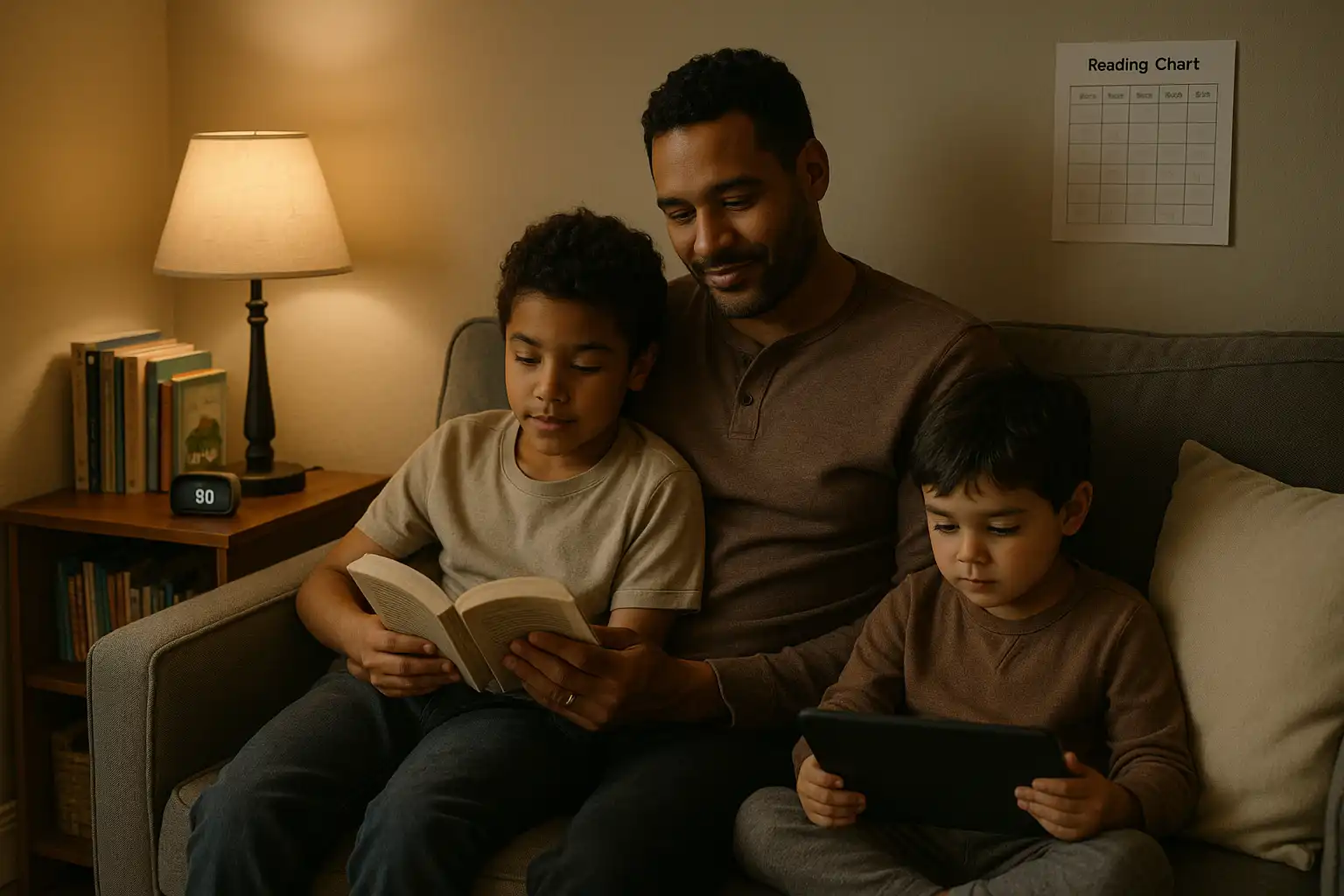
Make Reading a Daily Win: Practical, Personalized Reading Routines That Fit Busy Family Life
What You'll Learn
Short, consistent daily reading sessions of 15 to 30 minutes produce measurable gains when matched to your child’s needs and interests. (Allington, 2014; National Literacy Trust)
Use one clear path at a time: stamina building for longer focus or depth building for stronger comprehension, with simple end-of-session reflections to make progress visible.
Light-touch tracking and family habits keep motivation high; when you want automated tracking and personalized activities, Kaizly dashboard turns routine reading into measurable learning.
Introduction
TL;DR: 1) Aim for short, consistent daily reading. 2) Pick a path that matches your child: stamina or depth. 3) Track lightly and celebrate growth, not just completion. Here is how you can build a lasting reading habit that is measurable, motivating, and manageable even on your busiest days.
Why this matters to busy parents
Reading builds vocabulary, focus, empathy, and academic success. But a full schedule and varied ages in the household mean a plan must be realistic and flexible. This guide focuses on building the daily reading habit itself: how to make reading a consistent, automatic part of your family’s day. It gives step-by-step, start-to-finish instruction you can apply today to create a reading routine that fits your family’s rhythm, keeps children engaged, and shows real progress. It is written for working parents with one to three children aged five to twelve who value science based personalization and want tools that save time. If your child already reads regularly but struggles with comprehension, see our focused skill-building plan: Reading Comprehension Two-Week Routine.
Start by paying attention: small routines, big results
What if your child could learn on a schedule that fits your workday? The secret is routine plus relevance. Short, predictable sessions beat infrequent marathons. Research from literacy organizations shows daily reading, even in short bursts, supports better comprehension and confidence than long, irregular sessions (National Literacy Trust). The objective is consistency and enjoyment more than length.
Practical daily plans that fit into real life
A realistic reading plan follows three simple rules: pick a time that can recur, match the book to the reader, and end with a tiny reflection. Use one of the routines below or adapt them to your family calendar.
| Time of Day | Routine Example | Parent Tip |
|---|---|---|
| Morning jumpstart (15 to 20 minutes) | Read during breakfast or a few minutes before leaving for school. | Keep a short novel or nonfiction book on the table for quick access. |
| After-school reset (20 to 25 minutes) | Quiet independent reading before homework or dinner. | Pair with a small snack to make the time feel like downtime. |
| Bedtime wind-down (20 to 30 minutes) | Shared reading or independent reading in bed. | Keep it calm and conversational; no quizzes, just talk about favorite parts. |
Source: National Literacy Trust
How many minutes move the needle?
| Daily Reading Time | What It Builds | Ideal For |
|---|---|---|
| 15 to 20 minutes per day | Maintains skills and keeps comprehension steady | Busy families maintaining good habits |
| 25 to 30 minutes per day | Measurable gains in fluency, vocabulary, and comprehension | Most effective for grades 3 to 8 |
| 40 or more minutes per day | Increases stamina and academic vocabulary for deep comprehension | Avid readers or summer learning plans |
Reading-volume research (Allington, 2014) finds that a child reading 20 minutes per day encounters substantially more words per year than a child reading only a minute a day, producing major gains in comprehension and fluency.
Choose a path: stamina or depth
Every child is different. Use one path at a time so practice is focused and progress is easy to see.
Path 1. Stamina build
Goal: Lengthen focus and reading endurance. Ideal for: Children who stop after a few pages or lose track.
Choose a consistent daily time slot you can keep without negotiating.
Select a just-right book: slightly challenging but not frustrating.
Set a visible timer for 20 to 25 minutes of silent reading. A kitchen timer or phone will do.
After the timer, do a 2 to 3 minute reflection using one of these prompts: What part was hardest to stay focused on today? Did anything surprise you? What do you think will happen next?
Log the minutes or streak on a simple chart or app.
Tools and tips:
Use a simple paper tracker or a reading app.
Kaizly monitors streaks and minutes and links them to comprehension growth for reading in the app so you do not need to track details manually. Sign up for the Kaizly to automate logging and see trends without extra effort.
Path 2. Depth build
Goal: Strengthen comprehension, inference, and discussion skills. Ideal for: Readers who can sit and read but struggle to explain or connect ideas.
Alternate independent reading (15 to 20 minutes) with a 5 to 10 minute guided discussion.
Ask open-ended prompts: What would you change in this chapter? Why did the character choose that? What words stood out to you?
After a chapter or session, have your child write or record a one-sentence summary or pick one new word to define.
Log the chapter and activity to trigger suggested vocabulary or summarizing activities tied to the book.
Tip: Ten thoughtful minutes of discussion often improves comprehension more than extra silent minutes.
Make progress visible without pressure
The goal is to create pride, not anxiety. Light-touch methods give evidence of growth and boost confidence.
Streaks: e.g., three days in a row of reading before dinner.
Mini reflections: one-sentence takeaway after each session.
Visual progress: mark chapters or books on a family reading calendar.
Weekly check-ins: one short conversation on Sunday about what your child read and learned.
Why these work: External rewards can jumpstart effort but rarely sustain intrinsic motivation. Children stick with reading when they see their own improvement. Tracking minutes and reflections shows progress in a visible, low-pressure way.
Practical examples you can implement today
Monday morning: 15 minutes breakfast reading. Log minutes.
Tuesday after school: 20 minutes stamina reading with timer and 2 minute reflection. Mark chapter complete.
Wednesday bedtime: 20 minutes shared reading and a 5 minute conversation about a character’s choices. Note one new word.
Thursday: audiobooks in the car while following along in a printed copy. Log as 20 minutes of listening plus 5 minutes follow-up summary.
Friday: family read-aloud of a short chapter and everyone shares a favorite line. Celebrate the week.
A useful checklist for each session
Book chosen and appropriate level.
Clear start time and expected minutes.
Timer or app set.
Two-minute reflection question ready.
Quick log or mark on the calendar.
Family habits that make reading last
Read side-by-side. Keep your own book nearby.
Share a quick one-sentence takeaway about your reading at dinner.
Create a cozy reading zone with good light and accessible books.
Mix formats: comics, magazines, nonfiction, and audiobooks all count.
Avoid guilt: missing a day is fine; restart simply and warmly.
Small, consistent reading sessions build real skill and confidence. It is not about perfect routines, it is about steady practice that respects your family schedule.
How Kaizly helps parents save time and measure what matters
Turn any book into a tailored learning plan.
Automatically log minutes, identify comprehension trends, and celebrate streaks.
Receive suggested quick activities matched to the book your child finished.
Blend what your child chooses to read with targeted practice for weak skills.
If you want to explore activity ideas and step-by-step practices before signing up, see curated Reading Activities and a focused comprehension practice plan Reading Comprehension Two-Week Routine. For structured homework time that fits around reading, try the Ninety-Minute Homework Routine. To help your child write about what they read, see the One-Paragraph Writing Routine. To learn how to tailor these routines to your child’s profile and interests, read about Personalized Learning. When you are ready to automate tracking and receive tailored session activities, sign up for Kaizly.
Callout: Important note
If your child is struggling with decoding or shows signs of persistent difficulty, consult your school’s reading specialist or a licensed literacy professional for assessment and targeted support. Kaizly supports practice and tracking but is not a substitute for clinical evaluation.
Conclusion
Revisiting the three key takeaways: Short, consistent reading sessions of 15 to 30 minutes build measurable growth when aligned to your child’s needs. Choose a focused path: stamina or depth, and use guided reflections to make progress visible. Use light-touch tracking and family rituals to keep motivation high; when you want automated tracking and personalized activities, Kaizly dashboard turns everyday reading into measurable learning.
Next step
Start today with a single 15 to 20 minute session at a predictable time. If you want automated tracking and quick, tailored activities to reinforce each session, sign up for the Kaizly dashboard. This link takes you off site.
Frequently Asked Questions
Question: What does a realistic reading plan for my child look like?
Answer: A realistic plan fits around your family schedule, not the other way around. Start with 20 to 30 minutes a day at a predictable time like before bed, after dinner, or before school. Keep books your child enjoys within reach and focus on consistency over perfection.
Question: How many daily minutes for grades 3 to 8 really move the needle?
Answer: 15 to 20 minutes maintains skills; 25 to 30 minutes builds measurable growth in comprehension and fluency; 40 or more minutes develops advanced vocabulary and stamina. Evidence shows 20 minutes per day exposes children to substantially more words annually, supporting gains in comprehension. (Allington, 2014.)
Question: How can I track progress without making it a chore?
Answer: Use streaks, one-sentence reflections, and visual chapter or book logs. Kaizly automatically tracks minutes, comprehension markers, and streaks, which reduces parent effort while keeping progress visible.
Question: Should I let my child reread favorite books or push new ones?
Answer: Let them reread favorites. Repetition builds fluency and confidence. Introduce new books gradually alongside favorites when your child is comfortable.
Question: What if my child prefers audiobooks — does that count?
Answer: Yes. Audiobooks develop vocabulary and comprehension and expose children to new language structures. Encourage following along in print occasionally to strengthen decoding and fluency.
Question: What if my child resists reading altogether?
Answer: Start with true interests: sports, gaming, animals, or space. Graphic novels and short nonfiction are great entry points. Create small wins with short sessions and track progress to build momentum. Kaizly helps record those wins and suggest activities that build motivation.
Tags
References
National Literacy Trust, Children and Young People's Reading in 2023 Report. Annual report by the UK National Literacy Trust analyzing children's reading frequency, enjoyment, and motivation.
Allington, R. L. (2014). How Reading Volume Affects Literacy Development. Article summarizing research on how consistent daily reading time improves fluency, vocabulary, and comprehension.
National Endowment for the Arts, To Read or Not To Read: A Question of National Consequence (2007). NEA research report linking voluntary reading time to academic and personal success indicators.
Clark, C., & Rumbold, K. (2006). Reading for Pleasure: A Research Overview, National Literacy Trust. Comprehensive review of studies showing how reading for enjoyment improves academic achievement and mental well-being.
Organisation for Economic Co-operation and Development (OECD), PISA 2018 Results (Volume III): What School Life Means for Students’ Lives. OECD report highlighting the link between reading enjoyment and student performance across participating countries.
About Jim Carlson
Jim Carlson is the co-founder and CEO of Kaizly. A former marketing and technology executive and parent of three, he created Kaizly to help families support their children's learning and growth at home.
Related Articles
Summer Reading Bingo and Family Reading Activities 2025
Engage kids with Summer Reading Bingo and Family Book Club ideas. Perfect for grades 3-8, blending fun reading challenges with meaningful family discussions.
Read Article
Reading Comprehension Plan 2026: Nightly Routine
Reading comprehension: use a quick diagnostic, nightly three-step routine, and a 14-day mix of stories and informational text to build lasting understanding with simpler planning.
Read Article
One-Paragraph Writing Routine for Kids: Scaffold, Timer, Plan
One-paragraph writing routine that teaches a four-sentence scaffold, a ten-minute timer, and a 3-step planning method to build writing fluency for grades 3-8. Use short daily steps to track progress.
Read ArticleShare this article