Tutor vs. AI vs. Self-Directed: Which Actually Helps Your Child Catch Up?
Compare human tutors, AI learning platforms, and self-directed practice for grades 3-8. Includes cost ranges, a decision checklist, and a first-session guide.

Jim Carlson
Co-Founder & Parent
What You'll Learn
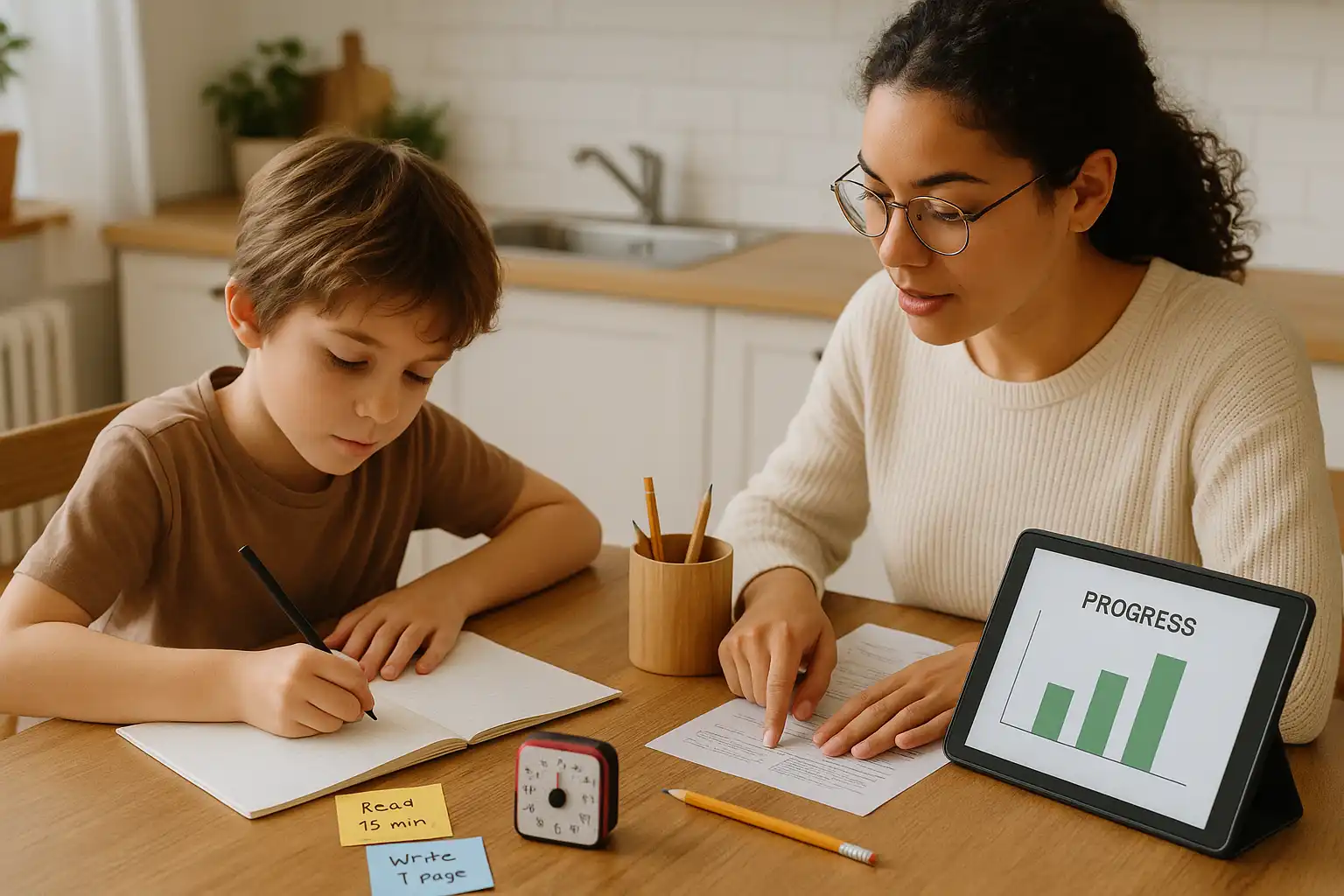
How human tutors, AI platforms, and self-directed practice compare on cost, flexibility, and effectiveness
A decision checklist to find the right fit for your child and family
What a productive first tutoring or AI learning session should look like
Red flags that signal a tutor or platform is not working
How to track whether your child's learning support is producing real results
Three ways to support your child's learning
Tutoring options have expanded quickly: in-person tutors, online video tutors, adaptive AI platforms, and self-directed practice materials. More choice can mean more confusion. This guide helps you decide between the main approaches based on your child's age, motivation, and the kind of support they need. For the principles behind personalized learning, see our parent's guide to personalized learning. For building your own plan at home, see our lesson plan guide.
Research on tutoring and small-group interventions consistently supports targeted, consistent help as one of the most effective strategies for academic growth. The Education Endowment Foundation's Teaching and Learning Toolkit rates one-to-one tuition at +5 months of additional progress and small group tuition at +4 months (EEF, 2023).
| Tutor | AI Platform | Self-Directed | |
|---|---|---|---|
| Cost | $20-80/hr | $10-30/mo | Free (parent time) |
| Time commitment | 1-2 scheduled sessions/week | ~15-20 min/day, flexible | Flexible; parent-curated |
| Best for | Kids who need accountability and rapport | Self-directed learners; daily reinforcement | Motivated readers; light reinforcement |
Comparing tutors, AI platforms, and self-directed practice
| Option | Typical Cost | Flexibility | Personalization | Progress Tracking | Best For |
|---|---|---|---|---|---|
| In-Person Tutor | $25-80/hr | Lower (scheduling + travel) | High (human judgment) | Moderate (tutor-dependent) | Younger kids; those needing accountability and rapport |
| Online Video Tutor | $20-60/hr | Moderate to High | Moderate to High | Moderate (tutor-dependent) | Middle schoolers; subject-specific help |
| AI / Adaptive Platform | $10-30/mo | Very High (anytime) | High (algorithm-based) | High (automatic) | Self-directed learners; daily reinforcement |
| Self-Directed Practice | Free (parent time) | Very High | Low (parent-curated) | Low (manual tracking) | Motivated readers; supplement to other methods |
| Hybrid (Tutor + AI) | $15-50/hr + $10-30/mo | High | Very High | High | Most families; combines human coaching with daily practice |
Human tutors: strengths, limitations, and costs
Human tutors excel at reading nonverbal cues, building rapport, and adapting explanations on the fly. In-person tutors ($25-80/hr) work best for younger children who need external structure, while online video tutors ($20-60/hr) offer greater scheduling flexibility and access to specialists beyond your area. The trade-off is cost and tutor variability — quality ranges widely, and finding the right match can take time.
AI learning platforms: strengths, limitations, and costs
AI platforms ($10-30/mo) provide immediate feedback, personalized pacing, abundant practice, and automatic progress tracking. They work best for motivated, independent learners or as daily reinforcement between human sessions. The limitation is emotional support — AI cannot read frustration, celebrate a breakthrough with genuine enthusiasm, or adapt to a child's mood. For a deeper look at how AI tutoring works, see AI in Education.
Self-directed practice: when and how it works
Self-directed practice using workbooks, library books, or free online resources costs nothing beyond parent time. It works well for children who are already motivated readers or who need only light reinforcement. The challenge is that parents must curate the materials and track progress manually, which can be unsustainable for busy families.
The hybrid approach
Many families find the best results by combining approaches: a human tutor for weekly coaching and accountability, plus an AI platform for daily skill practice between sessions. The tutor sets goals and provides nuanced feedback; the AI handles repetition and tracking. This hybrid model captures the strengths of both while keeping costs manageable.
Decision checklist: which option fits your family?
Your child needs external accountability and struggles to stay focused independently → Start with a human tutor (in-person for younger kids, online for middle schoolers)
Your child is self-motivated but needs more practice than school provides → An AI platform or self-directed practice may be sufficient
Your child has specific skill gaps (e.g., fractions, reading comprehension) that need targeted work → A tutor for diagnostics and strategy + AI for daily practice (hybrid)
Your budget is tight but your child needs consistent support → Start with an AI platform ($10-30/mo) and add a tutor if progress stalls
You want to supplement summer learning without scheduling complexity → AI platform for flexible daily practice at any time
What a first session should look like
Whether you are hiring a tutor or starting with an AI platform, the first session should follow a structured diagnostic pattern.
Before the session: Send the tutor samples of recent school work and a short note about specific struggles. For AI platforms, complete the initial assessment honestly — rushing through it undermines the personalization.
During the first 35-50 minutes: 10-15 minutes of brief diagnostic tasks tailored to the subject. 15-20 minutes of guided problem solving while the tutor observes how the child thinks. 5-10 minutes for feedback and goal setting with the child and parent together.
After the session: The tutor provides a concise note with one or two goals, suggested daily practice (15-20 minutes), and the next session focus. AI platforms should show a personalized learning path based on assessment results.
Five red flags to watch for
Promises of dramatic grade jumps before any assessment. Guarantees before diagnostics are guesses, not expertise.
Vague methods hidden behind buzzwords. If a tutor cannot explain their approach in plain language, they may not have one.
Your child cannot explain what they learned. If sessions feel like mystery or punishment, the approach is not working.
No documentation or progress notes. A professional tutor tracks what was covered and what comes next. If you have to ask every time, accountability is missing.
The same approach after four weeks with no results. Good tutors and platforms adjust when something is not working. Persistence without adaptation is stubbornness, not strategy.
How to track whether it's working
Use short, frequent indicators that map directly to the skills you are targeting.
Track specific metrics weekly: percentage of correct steps on targeted problem types, number of independently produced topic sentences, or accuracy on a short reading quiz
Keep goals specific and time-bound. Example: "In four weeks, 80% accuracy on two-digit multiplication with explanation"
Schedule brief parent check-ins with the tutor every two to three weeks to review notes and adjust the plan
For AI platforms, review the weekly progress dashboard and look for upward trends in specific skills, not just time spent
Practical scheduling for busy families
Research supports consistent, spaced practice over long cramming sessions. A practical weekly rhythm for most families:
Daily micro-practice: 15-20 minutes of targeted practice tied to session goals (a short reading, five math problems, or a paragraph of writing)
Weekly rhythm: Two focused sessions of 45 minutes each, or one 60-minute session plus three short daily practices
Monthly review: 15-minute parent + tutor check-in to review progress notes, sample work, and adjust goals
Example weekly calendar: Monday: 20-minute practice after dinner. Wednesday: 45-minute tutoring session after school. Friday: 20-minute practice with parent review. Saturday: 45-minute application session (writing or problem solving).
The best tutor is not always the one sitting across the table. The best tutor helps your child think clearly, grow consistently, and feel confident in their own progress.
Kaizly combines adaptive diagnostics, personalized daily practice, and automatic progress tracking — the AI side of a hybrid approach. Start free trial
Tags
References
Teaching and Learning Toolkit: One-to-One Tuition. Education Endowment Foundation (2023). Evidence review of tutoring effectiveness.
What Works Clearinghouse: Tutoring. Institute of Education Sciences (2022). Evidence-based recommendations for using tutoring to support K-12 students.
Continued Progress: Promising Evidence on Personalized Learning. Pane, J. F., Steiner, E. D., Baird, M. D., Hamilton, L. S., & Pane, J. D. (2015). RAND Corporation.
National Tutoring Association — Standards and Best Practices. National Tutoring Association. Information on tutoring standards and tutor certification.
About Jim Carlson
Jim Carlson is the co-founder and CEO of Kaizly. A former marketing and technology executive and parent of three, he created Kaizly to help families support their children's learning and growth at home.
Related Articles

Personalized Learning at Home: A Parent's Guide for Grades 3-8
What personalized learning means for grades 3-8 and how to start at home.
Read Article
How to Create a Personalized Lesson Plan for Your Child
Step-by-step guide to building a personalized lesson plan for grades 3-8.
Read Article
AI in Education: How Adaptive Learning Helps Kids at Home
How AI-powered adaptive learning works for grades 3-8 and what the research shows.
Read ArticleShare this article