One-Paragraph Writing Routine for Kids: Scaffold, Timer, Plan
One-paragraph writing routine that teaches a four-sentence scaffold, a ten-minute timer, and a 3-step planning method to build writing fluency for grades 3-8. Use short daily steps to track progress.

Jim Carlson
Co-Founder & Parent
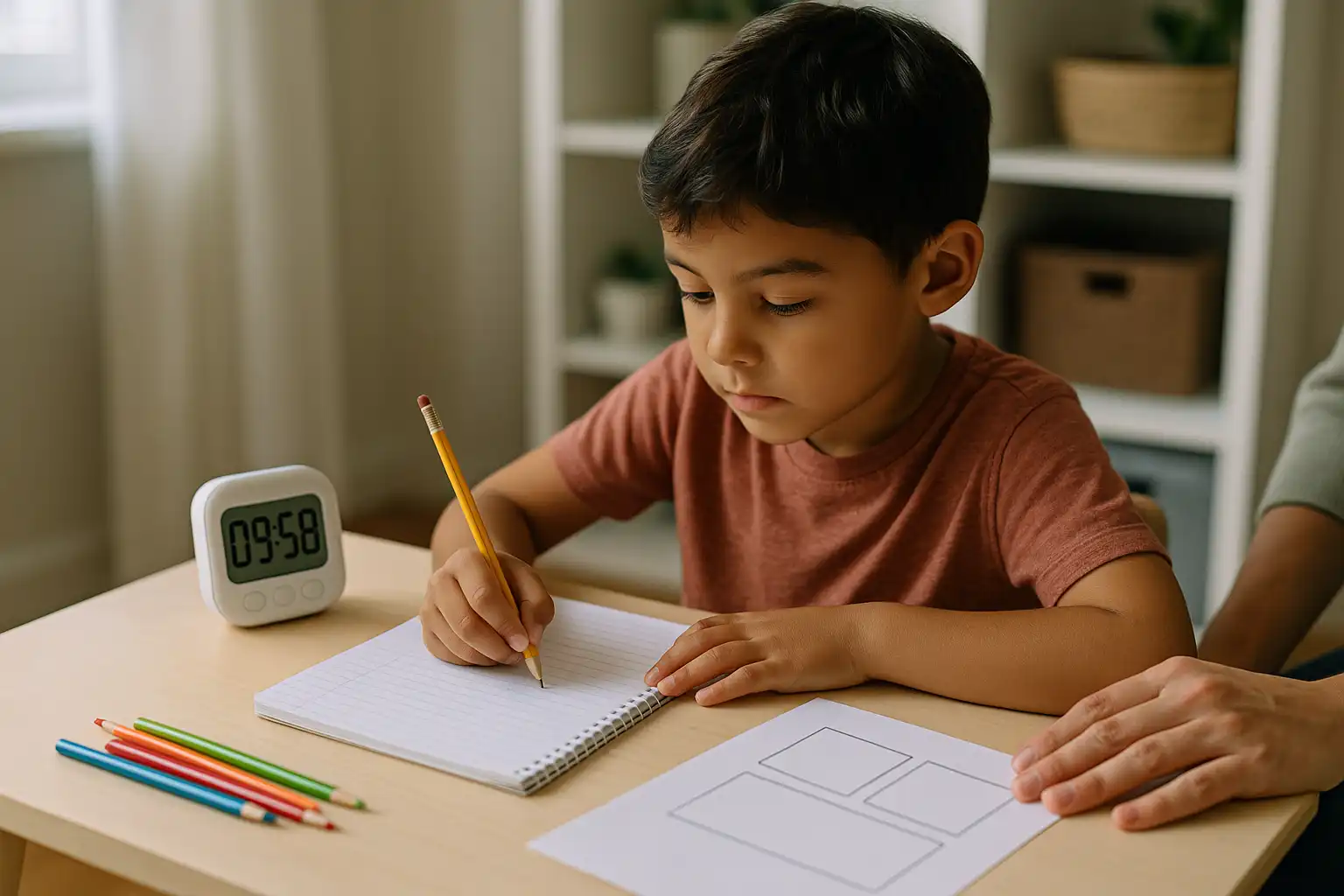
What You'll Learn
Teach a four-sentence scaffold so your child always knows the first move and can turn ideas into a complete paragraph.
Use a ten-minute timer plus a short cleanup period to build writing fluency and reduce perfection pressure.
Plan before writing with Brain Dump → Box It → Write It, and use Kaizly to turn these steps into a daily, trackable routine. Sign up for the Kaizly to automate routines and progress tracking.
TL;DR: Give your child a short, memorable structure, a tiny time window to work in, and a quick planning routine. Those three moves reduce overwhelm and create repeatable writing wins.
If you are a busy parent balancing work and family time, you want practice that is short, predictable, and effective. Writing can feel intimidating to kids because it asks them to do many things at once: think of an idea, organize it, and also worry about spelling and grammar. That combination often creates freeze. This article lays out a step-by-step plan you can use today to help your child go from blank page to first paragraph without tears. It also shows how Kaizly streamlines the process so you get clear progress without extra hovering for setup and features.
Why this matters: short structured practice builds skills faster than long unfocused sessions. Parents who want a science based, personalized routine will find these steps easy to fit into busy days and scalable as their child improves.
Why Kids Freeze at the Blank Page
When children stare at a blank page, it is often not laziness. Writing requires juggling idea generation, organization, sentence formation, spelling, and punctuation all at the same time. That overload commonly leads to paralysis.
According to cognitive scientist Dr. Daniel Willingham, students struggle when they have not internalized a guiding structure for their thinking (Willingham, 2009). Without a clear path, every new paragraph feels like starting over. Add the emotional layer of fear of being wrong, embarrassment about spelling, or perfectionism, and even articulate kids can freeze.
What if your child could learn on a schedule that fits your workday? Start by reducing steps and giving a predictable first move. The solution is a short scaffold plus a brief, nonthreatening time window to begin.
The Four-Sentence Scaffold: One Paragraph That Builds Confidence
| Sentence | Purpose | Guiding Question | Example (Grade 5) |
|---|---|---|---|
| 1 | Topic sentence | What am I writing about? | Dogs make great pets. |
| 2 | Reason / Example 1 | What is one reason or example? | They keep you active when you walk them. |
| 3 | Reason / Example 2 | What is another reason or detail? | They also make you feel safe at home. |
| 4 | Wrap-up sentence | What does this show or why does it matter? | Dogs are loyal friends that make every day better. |
Post the scaffold near their workspace so it is visible during writing.
Model one paragraph yourself using the scaffold and read it aloud.
Encourage early writers to speak sentence 1 out loud before writing it.
Parent tip: Post this scaffold where your child writes. Seeing the map reduces anxiety and builds automaticity.
Ten-Minute Timer Trick: Start Small, Build Momentum
Set a timer for ten minutes. The goal is to write, not to edit.
Focus on one part of the scaffold. You can start with sentence 1 and 2 on the first day.
When the timer rings, stop immediately and celebrate the start.
If you want a quick second round, give 5 minutes for cleanup: fix a couple of spellings, reread, or add one sentence.
Why this works: Short bursts reduce dread and teach children to begin without overanalyzing. Repeated tiny successes build confidence and habit.
Parent tip: Celebrate finishing the timer, not finishing the paragraph. The more often your child starts, the easier finishing becomes.
Plan Before Writing Instead of Rambling
Many children ramble because they have no plan. A simple three-step routine creates order without pressure.
Brain Dump — Set a 3-5 minute timer. Have your child write down every idea that comes to mind about the topic. No order, no editing. Try prompts such as: What do I want to say? What are two examples I could use? Why does it matter?
Box It — Draw three boxes on a page: Beginning, Middle, End. Have your child place their brainstorm ideas into the boxes: main idea, supporting examples, wrap-up idea. Color-coding helps visual learners.
Write It — Turn each box into one sentence using the Four-Sentence Scaffold. If time allows, use the Ten-Minute Timer Trick to write and then a five-minute cleanup.
This routine converts messy thoughts into a clear paragraph quickly. Practice these steps twice a week for consistent improvement.
How Kaizly mirrors this process
Kaizly provides a writing workspace with panels for brainstorming, drag-and-drop boxes, and sentence starters that match the scaffold. It also gives feedback focused on clarity and structure while tracking progress for parents.
Brainstorm panel for quick idea capture.
Drag ideas into Beginning, Middle, End boxes.
Sentence starters and adaptive prompts to help craft each sentence.
Feedback that emphasizes effort and organization rather than only correctness.
Visual reports for parents showing progress at a glance.
The Kaizly Move: Prompts and Feedback That Grow With Your Child
Finding the first words is often the hardest part. Kaizly includes age-appropriate prompts and sentence starters for grades 3 to 8, such as: One time I..., I think the best part was..., My favorite season is..., If I could change one thing...
Kaizly tracks development in ways that matter to parents and teachers: word count growth, sentence variety, use of paragraph structure, and feedback trends. Because feedback focuses on clarity, structure, and effort, kids receive encouragement that supports improvement without overwhelming parents.
Why you should care: consistent, encouraging feedback builds confidence faster than corrective-only comments. Kaizly handles the tracking and suggestions so you can support without taking on the role of constant editor. To try the Kaizly dashboard and set up these routines, sign up.
How Parents Can Support Writing at Home
| Strategy | Why It Works | Try This |
|---|---|---|
| Keep sessions short | Ten to twenty minutes prevents frustration and builds consistency | Use the Ten-Minute Timer Trick |
| Focus on ideas first | Content before correctness helps kids develop voice | Say: "Tell me what you want to say first. We will fix spelling later." |
| Celebrate finished paragraphs | Completion builds pride and intrinsic motivation | Save finished work in a "Writing Wins" folder |
| Encourage reflection | Helps kids notice progress and strengths | Ask: "What part was easiest to write today?" |
| Model writing | Kids mirror adult behavior and structure use | Write a short paragraph together using the scaffold |
Practical daily plan you can follow
Day 1: Brain Dump (3-5 mins), Box It (5 mins), Write first 2 sentences with a 10-minute timer.
Day 2: Quick Brain Dump (2-3 mins), complete paragraph using a 10-minute timer, 5-minute cleanup.
Twice a week: Save one paragraph to the Writing Wins folder and review growth every two weeks.
These short routines align with focused homework strategies that favor consistency over long sessions; see the Ninety-Minute Homework Routine for balancing concentrated practice with family time. For building a daily reading habit alongside writing, try the Daily Reading Routines for Busy Families. If your child also needs math routine support, see the Fractions Routine or the Word Problems Routine.
Putting It All Together: The Formula That Works
Plan it + Scaffold it + Time it + Reflect on it = Progress that sticks.
Use the scaffold to give your child the first move. Use the timer to make starting a habit. Use the Brain Dump → Box It → Write It routine to make planning automatic. Track progress and encourage effort. Over weeks, short targeted practice becomes real skill.
If you want a way to turn these steps into a daily habit with built in prompts and progress reports, explore Kaizly's dashboard now. You can also sign up directly to the Kaizly dashboard to create routines, assign prompts, and see progress summaries.
Note: Focus on starting over fixing. Prioritize ideas and structure before detailed corrections. Short wins matter more than perfect sentences at the beginning.
Note: If your child is resistant, reduce demands further. Try two minutes of talking about the topic before any writing. The goal is to create a pattern of easy starts.
Frequently Asked Questions
Question: My 4th grader hates writing. How do we get words on the page?
Answer: Start extremely small. Use the Four-Sentence Scaffold and say, "Let us just write for ten minutes about something you like." Use a prompt such as "One thing I like about..." and focus on sentence 1 and 2 during the first session. Praise effort and use Kaizly sentence starters for reluctant writers.
Question: What is a simple paragraph structure a 5th grader can remember?
Answer: The Four-Sentence Scaffold: 1. Topic sentence — What is it about? 2. Reason 1 — One example or reason. 3. Reason 2 — Another example. 4. Wrap-up — Why it matters. Make it visible and practice it together until it feels automatic.
Question: How can I help my child plan before writing instead of rambling?
Answer: Use the Brain Dump → Box It → Write It routine. Brain Dump for ideas, Box It into Beginning, Middle, End, then use the scaffold to write one sentence per box. Kaizly maps this process digitally if you prefer an online workspace.
Question: Should I correct my child's writing or let Kaizly give the feedback?
Answer: Balance both. Focus your comments on ideas, structure, and effort first. Let Kaizly provide structured feedback about organization and clarity. Save grammar and punctuation corrections for the cleanup round so you do not interfere with drafting.
Question: How can I make writing time feel less like a battle?
Answer: Make sessions predictable, short, and positive. Write alongside your child sometimes and end each session with a win, even if the win is only that your child started the timer and wrote one sentence. Tools like Kaizly make routine practice engaging; sign up to create routines and track progress.
Conclusion
Revisiting the three key takeaways: a four-sentence scaffold gives your child a clear first move and reduces cognitive overload; a ten-minute timer plus a short cleanup session builds writing fluency without pressure; and the Brain Dump → Box It → Write It routine turns messy thoughts into a single confident paragraph. Kaizly digitizes this routine so you can track progress easily.
Writing confidence grows when starting is easy and success is frequent. These steps give you a repeatable plan you can use today to change writing from a fight into a skill your child enjoys. To make these steps even simpler and track progress without extra work, try Kaizly. Sign up to the Kaizly dashboard to start building daily, trackable writing routines.
Final thought: Every confident writer begins with one paragraph and a parent who believes they can do it. Start short, stay consistent, and celebrate the small wins.
Tags
References
Willingham, D. T. (2009). Why Don't Students Like School?. Cognitive scientist Daniel Willingham explains how the mind works in educational settings and why structure reduces cognitive overload during writing tasks.
Graham, S., & Perin, D. (2007). Writing Next: Effective strategies to improve writing of adolescents in middle and high schools. Carnegie Corporation report identifying evidence-based strategies for improving adolescent writing, including process writing instruction and sentence combining.
National Council of Teachers of English — Writing Instruction Research. NCTE position statement on best practices for teaching writing, emphasizing daily practice, process over product, and scaffolded instruction.
About Jim Carlson
Jim Carlson is the co-founder and CEO of Kaizly. A former marketing and technology executive and parent of three, he created Kaizly to help families support their children's learning and growth at home.
Related Articles
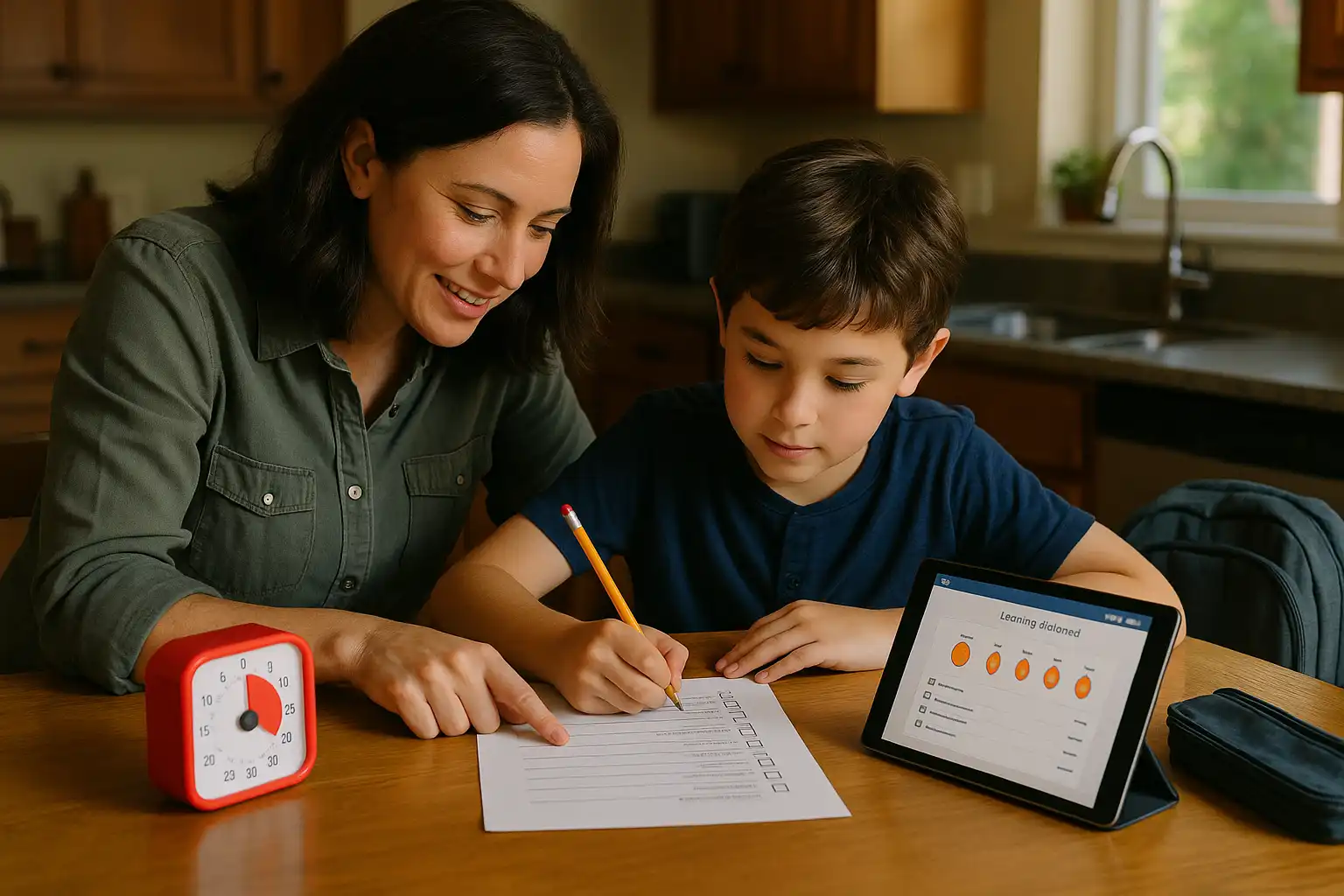
Ninety-Minute Homework Routine for Busy Families 2026
Ninety-minute homework routine helps busy parents after school. Use a 10-minute kickstart, two focused blocks, timers and Kaizly to build independence.
Read Article
Daily Reading Routines for Busy Families That Work 2026
Daily reading routines show how 15–30 minute sessions and one focused path (stamina or depth) build fluency and comprehension. Use light tracking to recognize growth.
Read Article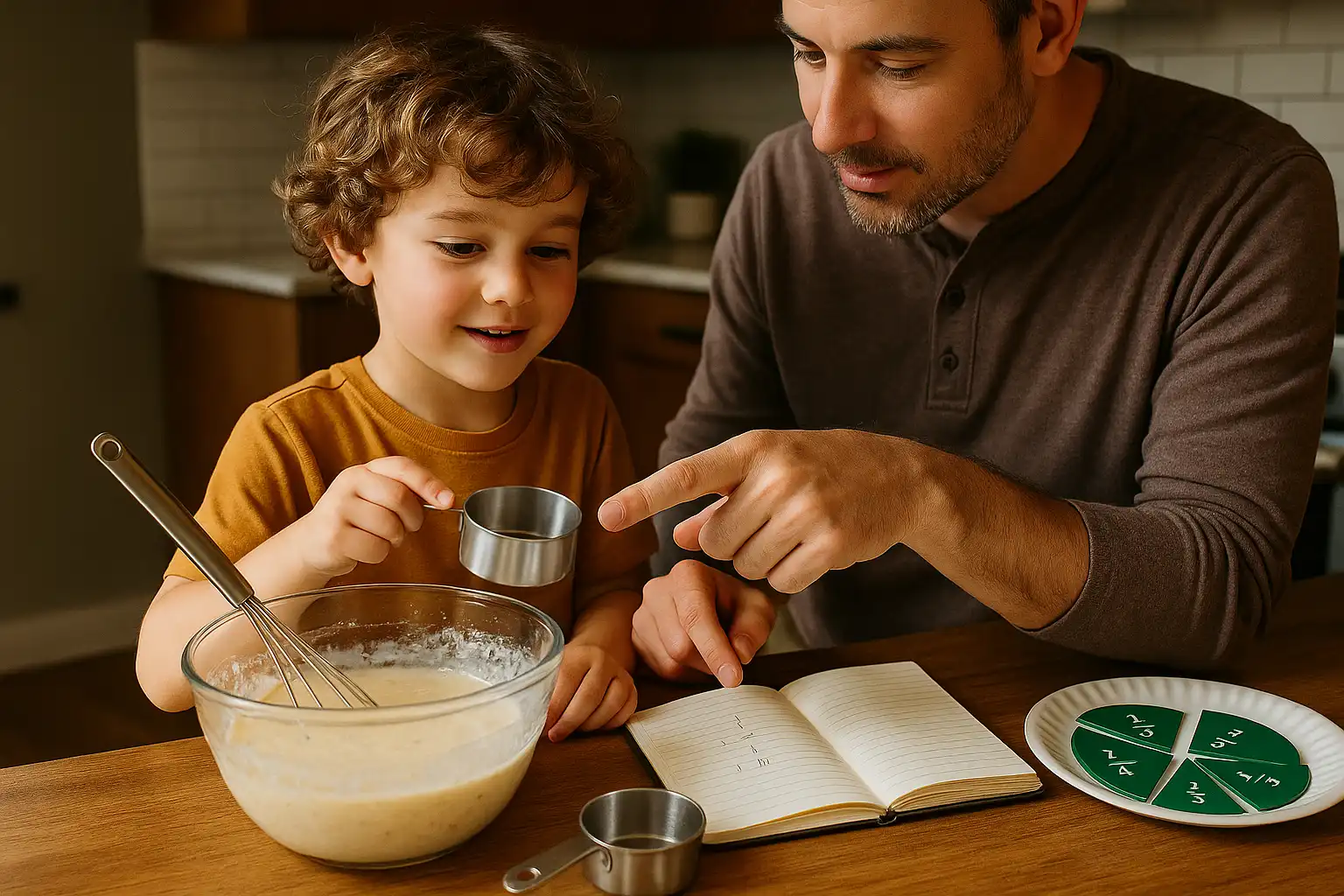
Fractions Routine: Cook, Cut, Number Line Plan 2026
Fractions routine: start with Cook → Cut → Number Line and 20–30 minute nightly sessions. Build fluency and connect to decimals with a step-by-step plan.
Read ArticleShare this article