Standardized Testing by State (2026): A Parent's Guide
State-by-state guide to standardized testing for grades 3-8. Learn which tests your child takes, when they happen, and how to prepare.

Jim Carlson
Co-Founder & CEO

What You'll Learn
Every state structures its standardized tests differently and requires its own specific approach.
Private schools typically do not administer state tests and prefer their own assessment methods.
This guide explains who designs the tests, why they matter, and offers a state-by-state overview with direct links for additional details.
How to prepare your child, understand score reports, and navigate accommodations and opt-out policies.
Introduction
If you have a child in grades 3 through 8, standardized tests are part of their school year. But which test does your state use? When does it happen? And what can you actually do to help your child feel ready? This guide answers those questions. You will find a breakdown of how testing works at the federal and state level, a complete 50-state table showing each state's test name and grade levels, and practical sections on preparation, accommodations, opt-out policies, and score reports. Whether your child attends public school, private school, or is homeschooled, you will find the information you need here. For a grade-by-grade skills checklist, see Preparing Your Child for the Next Grade.
A Closer Look at Standardized Testing Across States
Below is a comprehensive state-by-state overview of standardized testing in the United States. This table provides key information about each state's testing program, including test names, grades tested, and notable features. While private schools generally follow different assessment paths, this overview focuses on public school requirements. Note that test names and requirements can change. Always verify current details with your state's department of education. Texas families can also use our dedicated STAAR test prep guide for parents for a deeper look at that program. To see where your child stands before test day, try our free grade readiness assessments for grades 3-8.
| State | Main Public Test Name | Grades Tested | Private Schools Required? | Notable Facts/Unique Features |
|---|---|---|---|---|
| Alabama | ACAP | 2-8 | No | Computer-based; ELA includes a writing section, with science tested in grades 4, 6, and 8. Spring 2026 window ran mid-March through late April. |
| Alaska | AK STAR / PEAKS | 3-9 | No | Rural access challenges. |
| Arizona | AzM2 / AASA | 3-8, 10 | No | High school uses ACT for state accountability. |
| Arkansas | ACT Aspire | 3-10 | No | All 11th graders take ACT (state-paid). |
| California | CAASPP (SBAC, CAST, CAA) | 3-8, 11 | No | Multiple components, lots of acronyms. |
| Colorado | CMAS | 3-8, 11 | No | Science only in some grades. |
| Connecticut | Smarter Balanced | 3-8 | No | 11th graders take SAT for state measure. |
| Delaware | Smarter Balanced / SAT | 3-8, 11 | No | State covers SAT for all. |
| Florida | FAST | 3-10 | No | Computer-adaptive FAST given three times a year (PM1, PM2, PM3); only the spring PM3 counts as the year-end summative score. |
| Georgia | Georgia Milestones | 3-8, HS | No | End-of-course (EOC) tests required in HS. |
| Hawaii | Smarter Balanced | 3-8 | No | Only one school district (statewide). |
| Idaho | ISAT (SBAC) | 3-8, 10 | No | Some flexibility for districts. |
| Illinois | IAR / SAT | 3-8, 11 | No | All 11th graders take SAT. |
| Indiana | ILEARN | 3-8, 10 | No | Moved to a through-year model in 2025-26: three short checkpoints (fall, winter, spring) plus a spring summative; checkpoints do not count toward the final score. |
| Iowa | ISASP | 3-11 | No | Iowa Test of Basic Skills used to be king. |
| Kansas | Kansas Assessment Program | 3-8, 10 | No | Simple naming, computer-based. |
| Kentucky | KSA | 3-8, 10, 11 | No | State uses ACT for accountability. |
| Louisiana | LEAP 2025 | 3-8, HS | No | Still officially named LEAP 2025; 2026 results are the first scored under the state's new Grow accountability system. |
| Maine | MEA | 3-8 | No | 11th graders take SAT. |
| Maryland | MCAP | 3-8, HS | No | Series of different subject tests. |
| Massachusetts | MCAS | 3-8, 10 | No | Graduation requirement for 10th graders. |
| Michigan | M-STEP / PSAT / SAT | 3-8, 9-11 | No | SAT is state-required for 11th. |
| Minnesota | MCA-III | 3-8, 10, 11 | No | Math, reading, and science by grade. |
| Mississippi | MAAP | 3-8, HS | No | Required EOC for HS graduation. |
| Missouri | MAP | 3-8, HS | No | Some local flexibility in high school. |
| Montana | Smarter Balanced | 3-8 | No | Small population, few changes year to year. |
| Nebraska | NSCAS | 3-8 | No | Moves to adaptive testing. |
| Nevada | SBAC / ACT | 3-8, 11 | No | State pays for ACT for all juniors. |
| New Hampshire | NHSAS | 3-8 | No | SAT for grade 11. |
| New Jersey | NJSLA | 3-9 | No | Gradually moved from PARCC. |
| New Mexico | NM-MSSA / SAT | 3-8, 11 | No | 11th graders take SAT. |
| New York | NYSTP / Regents | 3-8, HS | No | Regents Exams = graduation requirement. |
| North Carolina | EOG / EOC | 3-8, HS | No | Multiple high school exit exams. |
| North Dakota | NDSA | 3-8, 10 | No | Simple structure, small state. |
| Ohio | OST / EOC | 3-8, HS | No | Grad requirements tied to EOC tests. |
| Oklahoma | OSTP / CCRA | 3-8, 11 | No | College/Career Ready Assessment for 11th. |
| Oregon | SBAC / OSAS | 3-8, 11 | No | Writing test phased out. |
| Pennsylvania | PSSA / Keystone Exams | 3-8, HS | No | Keystone for HS graduation. |
| Rhode Island | RICAS / SAT | 3-8, 11 | No | SAT replaces PARCC at HS level. |
| South Carolina | SC READY / EOCEP | 3-8, HS | No | EOCs in major HS subjects. |
| South Dakota | Smarter Balanced / SD Science | 3-8, 11 | No | Science grades vary. |
| Tennessee | TCAP / EOC | 3-8, HS | No | Includes optional ACT/SAT. |
| Texas | STAAR | 3-8, HS | No | Fully online with shorter tests and embedded supports; under HB 8 (2025), STAAR will be replaced by a new state assessment starting in 2027-28. |
| Utah | RISE / Utah Aspire Plus | 3-8, 9-10 | No | ACT for all 11th graders. |
| Vermont | SBAC / VT Science | 3-9 | No | Smallest testing population in US. |
| Virginia | SOL | 3-8, HS | No | Several required for graduation. |
| Washington | WCAS / SBA | 3-8, 10 | No | Science in 5, 8, 11. |
| West Virginia | GSA | 3-8 | No | Simple annual test. |
| Wisconsin | Forward Exam / ACT Aspire | 3-8, 9-11 | No | ACT required for 11th. |
| Wyoming | WY-TOPP | 3-10 | No | Digital adaptive test. |
Understanding Who Decides What Tests Your Child Takes
In the United States, the federal government outlines general assessment rules, while the true power lies with the individual states. Under the Every Student Succeeds Act (ESSA), states are required to assess reading and math for students in grades 3 through 8 and at least once in high school. Beyond that federal baseline, each state's department of education selects which specific tests are administered, which subjects are covered, and how results are used.
For example, in Texas the Texas Education Agency (TEA) administers the STAAR exam, while in California the California Department of Education (CDE) administers CAASPP. In New York, students take the NYSTP in elementary and middle school and Regents Exams in high school. The test names, formats, and stakes differ, but the federal requirement to test in reading and math during grades 3-8 is consistent nationwide.
Exploring the Different Types of Standardized Tests
There are three broad types of standardized tests that parents should be aware of:
State Tests: Each state delivers its own assessments, such as the STAAR in Texas, MCAS in Massachusetts, or Georgia Milestones. These tests are typically given in the spring to students in grades 3 through 8. Parents do not need to register their child separately — the school handles administration. Results usually arrive over the summer. Additional details are available on your state's department of education website.
National Tests: These include college entrance exams like the SAT and ACT, as well as the National Assessment of Educational Progress (NAEP), which provides a national benchmark. Many states now pay for all 11th graders to take the SAT or ACT as the state accountability test. For grades 3-8, NAEP is given to a sample of students and does not produce individual scores.
Specialized Tests: Exams such as Advanced Placement (AP) and International Baccalaureate (IB) offer opportunities for high school students to earn college credit. These are optional and chosen by the student and family.
What About Private Schools?
Private schools are generally not bound by state exam requirements. Instead, many private institutions rely on nationally normed tests such as the Iowa Test of Basic Skills (ITBS), the Stanford Achievement Test, or ERB's CTP. Some private schools use their own internal assessments. However, in states with school voucher or scholarship programs — such as Florida, Indiana, and Wisconsin — private schools that accept public funding may be required to administer the state test or an approved alternative. The National Center for Education Statistics offers more details on private school enrollment and assessment practices.
Organizing Testing: Timing, Format, and Subject Matter
The structure of standardized testing differs by state, but some patterns are consistent. Most tests are scheduled in the spring (March through May), with opportunities provided later in the academic year for retakes or makeup sessions. Many states are shifting to digital formats, although some continue to offer paper tests. Reading and math are universal components, while subjects such as science, social studies, and writing may or may not be included depending on the state and grade level.
Here is a quick reference for when subjects are typically tested:
| Subject | Typical Grade Levels | Notes |
|---|---|---|
| Reading / ELA | 3-8 | Required by ESSA in every state |
| Math | 3-8 | Required by ESSA in every state |
| Science | 5, 8, and once in HS | Required by ESSA at least once in each grade span |
| Social Studies | Varies | Not federally required; about half of states test it |
| Writing | Varies | Some states include writing in ELA; others test separately |
What About Homeschooled Students?
For families who choose homeschooling, standardized testing requirements vary widely by state. Some states have strict requirements: New York, for example, requires annual standardized testing in certain grades and submission of results to the local school district. Pennsylvania requires testing in grades 3, 5, and 8. Other states like Texas and Alaska have no standardized testing requirement for homeschoolers at all. The Home School Legal Defense Association maintains a state-by-state breakdown of legal requirements.
How to Prepare Your Child for Standardized Tests
Effective test preparation is not about cramming the week before. Research consistently shows that steady, low-stakes practice over time produces better results and less anxiety. Here are practical steps you can take at home:
Start early with short sessions. Two to three practice sessions per week of 10-20 minutes each is more effective than a single long session.
Use your state's released test items. Most state departments of education publish practice tests or sample questions on their websites.
Focus on the format, not just the content. Many students lose points because they are unfamiliar with how questions are structured (drag-and-drop, multi-select, constructed response). Practice with the format builds confidence.
Build a calm testing routine at home. For a step-by-step approach, see our Test Confidence Home Protocol, which walks you through timed practice, rapid feedback, and teach-back techniques.
Talk about tests in a matter-of-fact way. Avoid framing tests as high-stakes events. Instead, explain them as a way for the school to see what your child has learned.
Testing Accommodations for Students with IEPs and 504 Plans
Students with Individualized Education Programs (IEPs) or 504 Plans are entitled to testing accommodations under federal law. These accommodations are designed to remove barriers so the test measures what your child knows, not what their disability prevents them from showing. Common accommodations include:
Extended time (typically time-and-a-half or double time)
Testing in a separate, quieter room
Read-aloud of test directions or questions (for non-reading sections)
Large print or braille test forms
Use of a calculator on non-calculator sections
Frequent breaks
The specific accommodations your child receives on the state test must be documented in their IEP or 504 Plan and should match the accommodations they use during regular classroom instruction. If you believe your child needs accommodations they do not currently have, speak with their IEP team or 504 coordinator before testing season begins — changes typically need to be in place well before the test date.
Can Parents Opt Out of Standardized Tests?
Opt-out policies vary significantly by state. Some states, such as New York, Oregon, and California, have established processes that allow parents to refuse standardized tests for their children without penalty to the student. Other states, such as Texas and Georgia, do not have a formal opt-out mechanism and may count non-participation against the school's accountability rating. In some states, students who do not test may be required to attend school but sit in an alternative setting during the testing window.
If you are considering opting out, start by checking your state department of education website for the official policy. You can also contact your child's school principal or testing coordinator for guidance on local procedures. Keep in mind that while opting out does not typically affect your child's grades, it can affect school-level accountability scores.
How to Read Your Child's Test Score Report
After testing, you will receive a score report. These reports can look intimidating, but they generally contain three key pieces of information:
Proficiency level: Most states group scores into 3 to 5 performance levels, such as "Below Basic," "Basic," "Proficient," and "Advanced." The goal is for your child to score at "Proficient" or above, which means they are meeting grade-level expectations.
Percentile rank: This tells you how your child performed relative to other students. A percentile of 72 means your child scored higher than 72% of test-takers. Percentiles are useful for understanding relative standing but do not tell you what skills need work.
Growth score (where available): Some states report a growth measure that shows how much your child improved compared to students who started at a similar level. A strong growth score means your child is making solid progress, even if their proficiency level is not yet at the top.
Look at all three together. A child who scores "Basic" but shows high growth is on an upward trajectory and may just need more time. A child who scores "Proficient" but shows low growth may be coasting and could benefit from more challenge. If your report includes subject-area breakdowns (such as "Geometry" or "Informational Text"), use those to identify specific areas for practice.
11 Things Every Parent Should Know About State Testing
If you only remember a handful of points from this guide, make it these:
Your state, not the federal government, decides which test your child takes and what counts as passing.
Annual testing in grades 3-8 is required by federal law (ESSA), but every state chooses its own test and standards.
Private schools are generally not required to give the state test; most use nationally normed tests instead.
Homeschool testing requirements vary widely by state, from strict annual testing to none at all.
Most states test in the spring, typically between March and May; a few use multiple shorter testing windows across the year.
The test format matters as much as the content: computer-based question types like drag-and-drop and multi-select trip up well-prepared kids who have never seen them.
Scores are reported as performance levels or percentiles, not letter grades, and one test is a snapshot, not a verdict on your child.
Students with IEPs and 504 plans are entitled to accommodations, but they must be arranged well before test day.
Your state's department of education publishes free released practice questions; they are the best prep material available.
Opt-out rules vary significantly by state; children who do not test may still need to attend school during the testing window.
Short, calm practice sessions spread over weeks beat cramming; matter-of-fact framing protects your child's confidence more than any prep book.
Conclusion
Standardized testing does not have to be a source of stress. When you understand what test your state uses, when it happens, and what the scores mean, you can support your child with confidence instead of anxiety. Here are three next steps you can take today:
Find your state in the table above and note the test name and grades tested. Visit your state department of education website for released practice items.
Start a short, regular practice routine at home. Our Test Confidence Home Protocol gives you a ready-made plan for 10-20 minute sessions that build calm and competence.
Check where your child stands with a free grade readiness assessment. Knowing their current skill level helps you focus practice on the areas that matter most.
For a complete skills checklist by grade level, see Preparing Your Child for the Next Grade. And if you want personalized, standards-aligned practice tailored to your child's level, try Kaizly's learning tools to help your child prepare with confidence.
Frequently Asked Questions
What standardized tests does my child take?
It depends on your state. Each state selects its own assessment program for public school students in grades 3-8. Use the 50-state table above to find your state's test name, the grades tested, and any notable features. If your child attends a private school, the school likely uses a different nationally normed test.
When are standardized tests given?
Most states administer standardized tests in the spring, typically between March and May. Some states, such as Florida with its FAST program, use a progress monitoring model with multiple testing windows throughout the year. A few states offer fall retakes for students who did not meet proficiency in the spring.
Can I opt my child out of standardized tests?
Policies vary by state. Some states, including New York and Oregon, allow parents to opt out without penalty to the student. Others do not have a formal opt-out process and may count non-participation against the school's accountability rating. Check your state department of education website for the official policy.
How should I prepare my child for standardized tests?
Focus on consistent, low-stakes practice rather than cramming. Two to three short sessions per week of 10-20 minutes each is more effective than marathon study sessions. Use your state's released practice tests and build familiarity with the test format. For a step-by-step home routine, see our Test Confidence Home Protocol.
Do private school students take state standardized tests?
Generally no. Most private schools are not required to administer state tests. Instead, they typically use nationally normed assessments such as the Iowa Test of Basic Skills (ITBS), the Stanford Achievement Test, or ERB's CTP. However, in states with voucher or scholarship programs, private schools that accept public funding may be required to administer the state test or an approved alternative.
What if my child has test anxiety?
Test anxiety is common and manageable. Short, regular practice under mild time pressure helps your child build familiarity and calm. Avoid framing tests as high-stakes events. Instead, treat practice sessions as routine. Our Test Confidence Home Protocol includes a 10-20 minute home routine designed specifically to reduce test nerves through structured practice and rapid feedback.
Which standardized test does each state use?
Every state picks its own test name and format, so there is no single national exam for grades 3-8. Texas gives the STAAR, California gives CAASPP, New York gives the NYSTP, and so on. The 50-state table above lists the test name, grades tested, and notable features for every state, so check your state's row for the specifics.
Do all 50 states require standardized testing?
Yes. Under the Every Student Succeeds Act (ESSA), every state must assess public school students in reading and math in grades 3 through 8, plus once in high school. States choose their own test name and format, but the federal requirement to test those subjects at those grades is the same everywhere.
Which states use STAAR?
Texas is the state that uses STAAR, administered by the Texas Education Agency for students in grades 3-8 and high school. Under HB 8 (2025), STAAR is set to be replaced by a new state assessment starting in the 2027-28 school year. See the 50-state table above for details on Texas and every other state's test.
How long does state testing take?
It varies by state and grade level, and most states spread testing across more than one session rather than a single sitting. Some states test math and reading on separate days; others break each subject into multiple shorter sessions. Check your state department of education website, linked in the table above, for your state's exact schedule.
Can states opt out of standardized testing altogether?
No. Under ESSA, every state must administer reading and math tests in grades 3-8. What varies is whether individual parents can opt their own child out of taking those state-required tests. Some states, including New York and Oregon, allow a parent opt-out with no penalty to the student; others do not have a formal process and may count non-participation against the school's accountability rating.
Tags
References
Every Student Succeeds Act. US Department of Education (2023)
Private Schools Assessment and Accountability. National Center for Education Statistics (2023)
State Assessment Requirements. Home School Legal Defense Association (2023)
About Jim Carlson
Jim Carlson created Kaizly to help families support their children's learning at home.
Related Articles

Understanding and Preventing Summer Slide
Learn what summer learning loss is and how to prevent it with engaging activities.
Read Article
Preparing Your Child for the Next Grade
Discover key skills for grades three through eight and how to prepare over the summer.
Read Article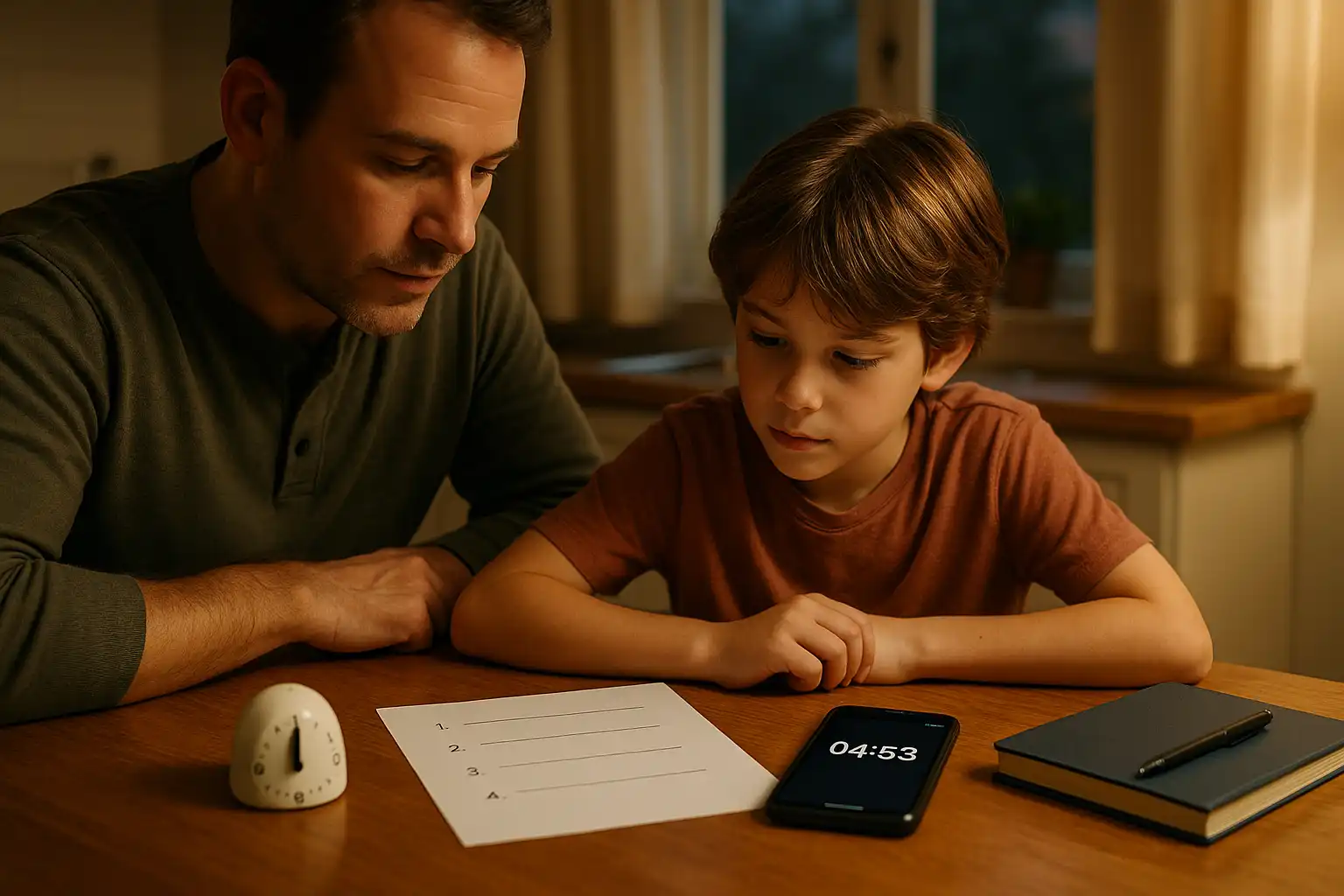
Test Confidence: Home Protocol for Parents 2026
Test confidence: Use brief, timed home routines, 3-5 question quizzes, rapid feedback, teach-back, and 3-minute recall to reduce test nerves. Two to three 10-20 min sessions weekly.
Read ArticleShare this article