Test Confidence: Home Protocol for Parents 2026
Test confidence: Use brief, timed home routines, 3-5 question quizzes, rapid feedback, teach-back, and 3-minute recall to reduce test nerves. Two to three 10-20 min sessions weekly.

Kaizly Team
Research Team
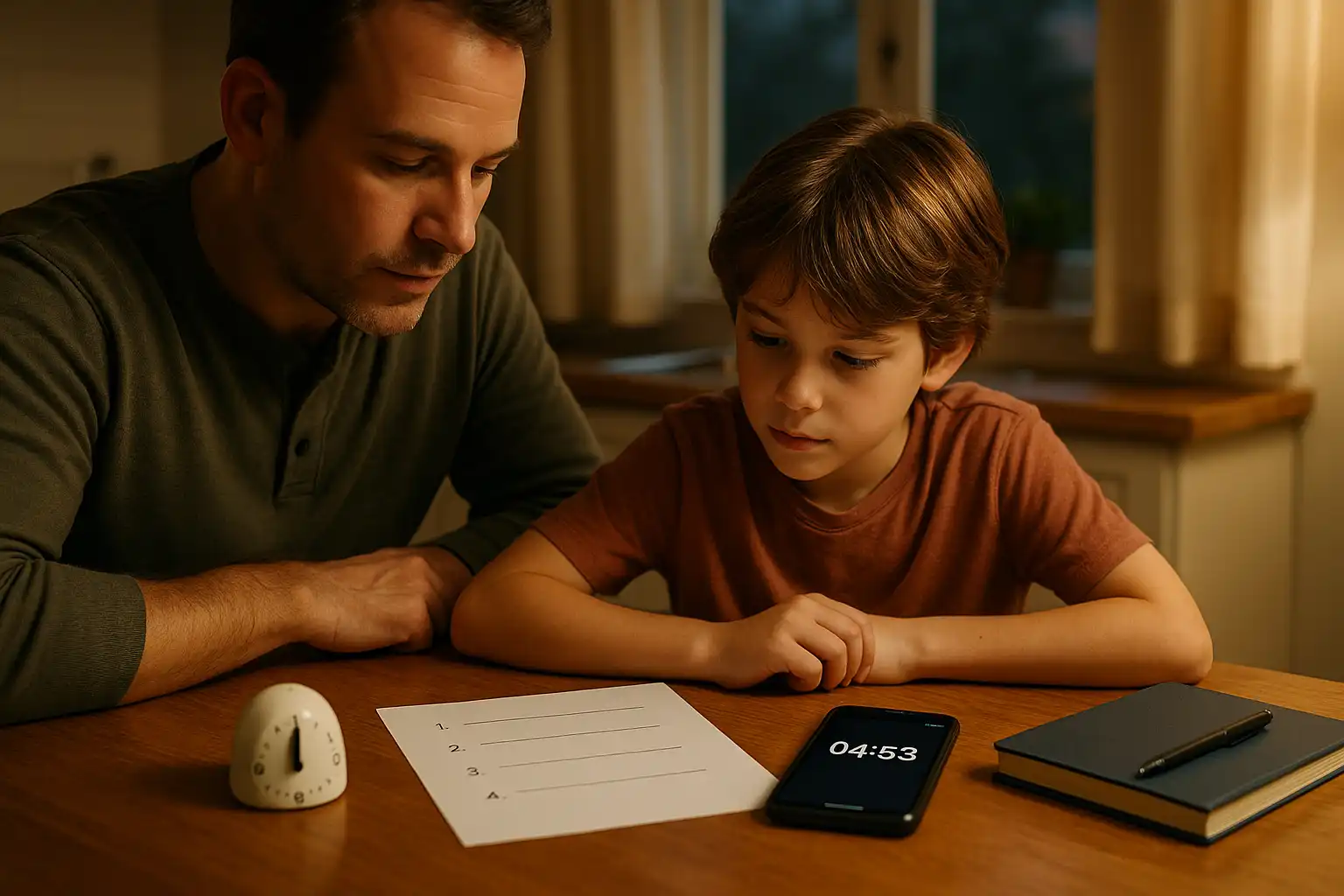
Test Confidence: Home Protocol for Parents 2026
What You'll Learn
Short, consistent practice quizzes that mimic test conditions build calm recall more than long, relaxed study sessions. Do three to five questions in five minutes, two to three nights per week.
Use an immediate, neutral feedback loop plus a quick teach-back and a three minute recall to turn mistakes into reliable corrections.
Track patterns with Kaizly to run timed practice, log errors, and adapt to each child’s needs.
TL;DR: Run brief, repeatable home sessions that simulate test conditions, give fast feedback, and end with a short teach-back and a timed recall. Do this two to three times per week for ten to twenty minutes and you will turn shaky test performance into steady, confident retrieval. This approach fits into a broader Personalized Learning plan many families use to adapt practice to each child’s needs.
Why this matters for busy parents
If your child does homework fine but freezes on quizzes, you are not alone. Homework often happens in low pressure settings. Tests put the same skills under time limits, single delivery of directions, and quiet conditions. Those differences can trigger stress that interferes with working memory and planning. With a short routine you can retrain the brain to handle mild pressure, make corrections fast, and see real progress. This guide gives step by step instructions you can use tonight. The goal is to make parents’ lives easier and kids’ lives richer.
Why practice conditions must match test conditions
Children often master procedures in relaxed practice but fail to retrieve those procedures when the environment changes. Stress shifts brain chemistry and can disrupt the prefrontal cortex, which supports working memory and executive control (Arnsten, 2009). That explains why a student who can explain a method at dinner might blank during a timed quiz.
What if your child could learn on a schedule that fits your workday?
You can build short, predictable sessions into evenings or weekends. The protocol below fits into ten to twenty minutes and repeats in a way that trains calm. Use it as a consistent ritual, not a marathon cram session. If you already use a weekly lesson structure, integrate these mini sessions with your existing lesson plans (Personalized Lesson Plans) so practice aligns with classroom pacing.
The research base in plain language
Stress can reduce working memory and flexible thinking, making multi step tasks harder (Arnsten, 2009).
Retrieval practice using short quizzes strengthens long term memory more than rereading notes (Roediger and Karpicke, 2006; Pastötter and Bäuml, 2014).
Immediate, specific formative feedback helps students adjust and learn without added pressure (Shute, 2008).
Having students explain their thinking in their own words improves understanding and reveals gaps quickly (Chi et al., 1994).
Science snapshot: Stress can impair working memory and flexible thinking. Practice tests improve long term retention compared to rereading. Prompt, specific feedback supports learning without adding pressure. Self explanation forces learners to connect steps in their own words.
The simple home protocol you can use tonight
Run this two to three nights each week for ten to twenty minutes. Keep it short, steady, and predictable. The consistency is what retrains the brain response.
Step 1: Mild stress practice sessions
Create a mini quiz that mimics test conditions in a friendly way. Use three to five questions. Five minutes maximum. Use a kitchen timer, a phone countdown, or the Kaizly timer. Light instrumental music is optional. The purpose is familiarity with gentle pressure.
How to set up
Choose one skill or topic that matches classwork that week.
Select three to five questions at the right difficulty, focused on that single skill.
Set a five minute cap for the full set.
Remind your child: this is practice. Missing an item is fine. The aim is building speed and calm.
Parent friendly tips
Make it a quick ritual after dinner or right after regular homework.
Keep your voice calm. Coach energy works better than authoritarian energy.
Celebrate effort and good attempts, not only correct answers.
Callout: What if my child panics at the timer? Start with a longer time limit and reduce it across sessions. Or remove the timer while keeping music and quiet rules. The goal is a gentle ramp, not a sudden drop in comfort.
Step 2: Rapid feedback loop
Score the quiz immediately when the timer ends. Use a simple two column routine: what went well, and what to fix. Keep the tone neutral and specific.
Correct the quiz together right away.
For each miss, write one clear fix. Examples: "Misread the minus sign" or "Forgot to carry one" or "Mixed up photosynthesis and cellular respiration."
Pick one micro skill to practice before the next session.
If you use Kaizly, the errors are captured in the platform. As patterns emerge, the app will create lessons and practice problems to help improve scores.
We learn the most from the question that bugged us. Let us find the one fix that will help the very next try.
Step 3: Explain it back check
Ask your child to teach the concept back in their own words for thirty to sixty seconds. If they can explain it simply, understanding is likely solid. If they cannot, the explanation shows exactly where the gap is.
"Pretend I missed class. Teach me in two lines."
"Walk me through the first step like I am in third grade."
"Show one example and one non example."
Capture gaps as the next session’s targets. Self explanation improves understanding by forcing the student to connect steps and thus strengthens retrieval (Chi et al., 1994).
Step 4: The three minute challenge
End the session with a timed recall burst. Set a three minute timer and ask your child to list three key ideas, formulas, or steps from memory without notes. Speed under mild cognitive load builds retrieval strength.
Math: "Write three fraction addition rules to remember."
ELA: "List three thesis patterns you can use."
Science: "Write the three steps of the water cycle."
Social studies: "List three causes of the event you studied."
If they stall, prompt with a single first word. If your weekly schedule is tight, this short format pairs well with a longer weekend review or a focused homework block that mirrors a Ninety Minute Homework Routine.
Weekly rhythm that creates momentum
Two to three sessions per week are ideal.
Weekly plan you can copy
Monday or Tuesday: five minute mini quiz, score, fix, teach-back, three minute recall.
Thursday: repeat with a second related skill.
Saturday or Sunday: ten minute family review for ten minutes.
End of week family review: Hold a ten minute family check in. Discuss what felt easier and what remains sticky. Celebrate specific wins rather than perfect scores. Consistency builds confidence.
Test day reflection prompts for kids
What felt easier this time compared to last week?
When I feel stuck, what is my first calm move?
One thing I want to try on this test that I practiced this week is
Mindset note: Nerves are information. They mean the brain is paying attention. With repeated mild stress exposure and rapid feedback, nerves become a useful cue to focus rather than a reason to freeze.
The Kaizly Move: run the routine, track the results, and let practice adapt
Kaizly supports the whole routine so parents save time and kids get personalized practice.
How Kaizly supports each step
Set up timed review sessions inside Kaizly for 3 to 5 questions with a five minute cap.
Kaizly will quiz and log results with a quick, neutral, helpful feedback.
Let Kaizly automatically adapt practice by increasing review when errors cluster and lightening the load when a skill is mastered.
Explore Kaizly as the easiest way to plan and track home learning: sign up at Sign up to run your first timed session and start saving error patterns automatically.
Why this method works for busy families
It safely simulates test conditions so the brain learns that pressure is familiar.
Frequent retrieval practice strengthens memory under time pressure.
Immediate, neutral feedback turns errors into clear fixes.
Short routines train executive function skills like planning and working memory without long sessions.
The whole protocol fits into ten to twenty minutes and is easy to run consistently.
Putting it all together: a checklist you can follow
Before you start
Pick one skill for the week.
Prepare three to five focused questions.
Set a five minute timer.
During the session
Run the mini quiz under quiet conditions. No notes allowed.
Score immediately. Capture one fix per miss. Log it.
Have your child explain the idea back in thirty to sixty seconds.
Finish with the three minute recall list and save it.
Weekly
Two to three sessions. One family review. Celebrate progress and small wins.
Parent scenarios and quick plays
Great at homework, weak on quizzes: Run the routine three times a week for two weeks. Track the most frequent error and build a five minute drill for off days. Use explain it back to catch fragile steps.
No time for long sessions: Ten focused minutes beat an hour of unfocused review. Stick to the protocol. If you already use a longer home block, combine this protocol with that time for targeted practice (Ninety Minute Homework Routine).
Timer jitters: Start with a stopwatch that counts up, move to a gentle countdown, and lower the time by one minute each session until you reach five.
I do not know the content: Let your child teach you. Your prompts and Kaizly’s logging are enough to guide improvement.
Why teachers and researchers recommend similar approaches
Programmatic practice that includes exposure to test like conditions, cognitive strategy instruction, and timely feedback shows positive effects in school based interventions (von der Embse et al.). Retrieval practice and self explanation are well established as effective learning techniques (Roediger and Karpicke, 2006; Chi et al., 1994). For a state-by-state overview of the tests your child will face, see our Parent Guide to Standardized Testing. For guidance on building a personalized routine that aligns with classroom goals, see our resources on Personalized Learning and structured lesson planning (Personalized Lesson Plans).
Conclusion
Quick recap of the three key takeaways
Short, regular mini quizzes build calm recall better than extended, relaxed study.
Immediate, neutral feedback plus teach-back and timed recall convert mistakes into reliable improvements.
Use Kaizly to run, log, and adapt practice so parents spend less time planning and kids get targeted practice.
The promise: A consistent ten to twenty minute routine trains calm and builds confidence. Parents save time because the routine is short, structured, and trackable. Children’s learning becomes richer because practice targets retrieval under real conditions.
Next step: Start tonight. Pick one skill, prepare three to five questions, set a five minute timer, and follow the steps above. Or explore Kaizly’s dashboard as the easiest way to plan and track home learning. Sign up, run your first timed session, and watch error patterns shrink.
Callouts: Important: Keep sessions short and predictable. Too long or irregular practice can increase anxiety rather than reduce it.
Warning: If your child has severe test anxiety that includes panic attacks or avoidance, consider consulting your pediatrician or a qualified school counselor in addition to this home protocol.
Frequently Asked Questions
Question: How can I reduce math test anxiety at home?
Answer: Use the simple home protocol with three to five math items focused on a single skill. Score immediately and write one fix per miss. Ask for a thirty to sixty second teach-back of the first step. Finish with a three minute list of three math rules. Repeat two to three times weekly. Over two to three weeks you should see calmer starts and fewer rushed mistakes.
Question: My child is great at homework yet bombs quizzes. What should we change?
Answer: Shift some practice time into short, timed quizzes with no notes and immediate feedback. Add the teach-back to confirm understanding. Homework builds skill; practice quizzes build skill under constraints. You need both.
Question: What is a simple way to check if a new concept is understood?
Answer: Use the explain it back method. Ask your child to teach the concept in two lines and provide one example and one non example. If they do that, the concept is likely solid. If not, you have a clear next target.
Question: How often should we run mild stress practice sessions?
Answer: Two to three times per week is ideal. If anxiety is high, begin with two sessions and build to three.
Question: What is the best way to give feedback without adding pressure?
Answer: Be specific, quick, and neutral. Replace judgmental phrases with concrete fixes. Focus on the next attempt. Celebrate movement toward the fix.
Question: Can this help with standardized test nerves too?
Answer: Yes. Use slightly longer timers and the same steps as test day approaches. Simulate the experience in small, safe doses and nerves will feel more familiar and manageable.
Question: What if my child says they do not want to practice?
Answer: Make the task tiny and predictable. Offer choices about which skill or which music to use. End on a win and thank them for the effort.
Question: How do I know it is working?
Answer: Look for faster starts on quizzes, a calmer pace, fewer "I forgot" moments, and clearer explain it back summaries. Inside Kaizly you will also see error types shrink and targeted practice recommendations appear.
Tags
References
Stress signalling pathways that impair prefrontal cortex structure and function. Arnsten, A.F.T. (2009). Nature Reviews Neuroscience, 10(6), 410-422.
Test-Enhanced Learning: Taking Memory Tests Improves Long-Term Retention. Roediger, H.L. & Karpicke, J.D. (2006). Psychological Science, 17(3), 249-255.
Focus on Formative Feedback. Shute, V.J. (2008). Review of Educational Research, 78(1), 153-189.
Eliciting Self-Explanations Improves Understanding. Chi, M.T.H. et al. (1994). Cognitive Science, 18(3), 439-477.
Retrieval practice enhances new learning: the forward effect of testing. Pastotter, B. & Bauml, K.-H.T. (2014). Frontiers in Psychology, 5, 286.
Test anxiety interventions for children and adolescents: A systematic review. von der Embse, N. et al. (2018). School Psychology Quarterly, 33(1), 62-78.
About Kaizly Team
The Kaizly research team provides families with evidence-based guidance on supporting children's learning at home.
Related Articles

Personalized Learning at Home: A Parent's Guide for Grades 3-8
What personalized learning means for grades 3-8, the research behind it, seven proven frameworks, and how to start at home with grade-band tips and FAQ.
Read Article
Ninety-Minute Homework Routine for Busy Families 2026
Ninety-minute homework routine helps busy parents run calm, focused evenings. Use a 10-minute kickstart, two focused blocks, timers and Kaizly streaks to build independence.
Read Article
How to Create a Personalized Lesson Plan for Your Child
Step-by-step guide to building a personalized lesson plan for your child in grades 3-8, with a 6-step framework, grade-band examples, and FAQ.
Read ArticleShare this article