Spark Summer Creativity with Story Prompt Jar & Family Newsletter
Kids who write for a real audience naturally self-edit and reach for stronger vocabulary. A Story Prompts Jar and a Family Newsletter give grades 3 to 8 exactly that, without a single worksheet.

Lindsay Carlson
Parent contributor
What You'll Learn
How a Story Prompts Jar eliminates 'I don't know what to write', the same block that keeps kids from practicing over summer, with random characters, settings, and conflicts pulled from a jar
What makes the Family Newsletter Project unusually effective: it gives kids a real audience, which naturally produces self-editing, specific vocabulary, and stronger sentences without any instruction
A comparison table to match each activity to your child's writing style, available time, and energy level on any given day
A blank page can feel daunting to a kid in July. These two writing projects solve that: a Story Prompts Jar that gives your child a random character, setting, and conflict to write from, and a Family Newsletter where they become the household reporter. Both work for grades 3 to 8, take 20 to 45 minutes to start, and use supplies you already have.
Story Prompts Jar: where random characters, settings, and conflicts collide to inspire laugh-out-loud stories
Family Newsletter Project: a real-world publishing mission that turns your young writer into the household reporter
Quick Pick Guide for Busy Parents
| Criteria | Story Prompts Jar | Family Newsletter Project |
|---|---|---|
| Ideal for kids who | Love imaginative play, enjoy silly stories, thrive on creative freedom | Enjoy reporting real events, like drawing layouts or interviewing family |
| Time needed | 20–30 minutes per story session (prep plus writing) | 30–45 minutes per issue (gathering news, writing, designing) |
| Parent involvement | Light setup, prompt ideas, enthusiastic audience at the end | Moderate guidance on layout, occasional proofreading, help with distribution |
| Mess factor | Low – slips of paper and pencils | Low to medium – scattered pages or digital files, optional printing cleanup |
| Writing focus | Narrative structure, descriptive language, creative storytelling | Expository writing, editing, basic layout and design skills |
| Best mood match | High-energy creative burst or rainy-day boredom buster | Calm focused time or family bonding afternoon |
Activity 1: Story Prompts Jar – Creative Writing Challenge
What the Story Prompts Jar Teaches
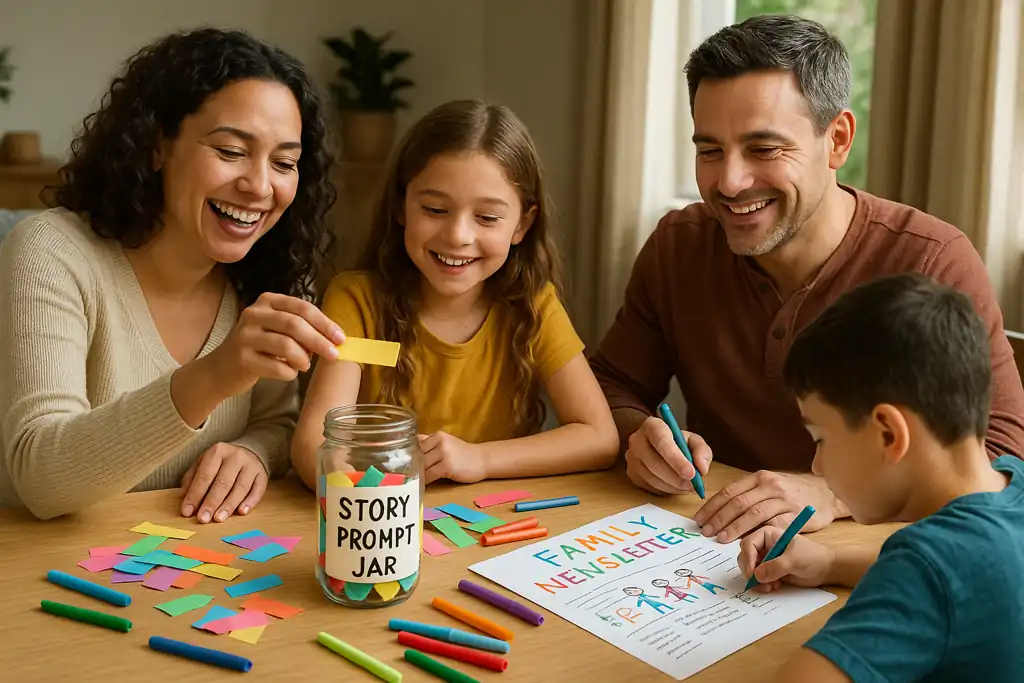
Ignite your child's imagination with a Story Prompts Jar. This is a fun, creative writing game where the child randomly picks prompts that give a scenario or elements for a story, then writes a short story (or a chapter, or a comic) based on it. You (or you and the child together) will prepare a jar full of prompts on slips of paper. You can have different categories to mix and match, for example: Characters, Settings, and Conflicts. The child draws one from each category to get something like 'a pirate, in a space station, has to win a cooking contest.' For a simpler version, just use a single jar with various funny or intriguing one-liners like 'You wake up and can talk to animals' or 'Two friends discover a secret map in an old library book.' This works for grades 3 to 8 because you can tailor the complexity of prompts and the length of writing expected. Younger kids might write a few sentences or dictate while drawing pictures. Older kids could turn a prompt into a multi-page adventure or the first chapter of a longer tale.
Why It Works for Grades 3 to 8
Children's imaginations are soaring at this age. Third through fifth graders often enjoy fantastical play and storytelling, giving them wacky prompts channels that into writing practice without it feeling like school. At that stage, they benefit from guidance (the prompts) but also need freedom to be silly and not worry about perfection. For middle schoolers, creative writing can be an emotional outlet and a chance to experiment with their burgeoning sense of humor or drama. They often appreciate not being constrained by strict assignments, so a prompt gives just enough structure but plenty of room to make the story their own. Writing from prompts encourages them to organize a narrative with a beginning, middle, and end around whatever random elements they drew. It also often leads to writing for an audience, because kids love to share these stories with family, which is exactly what builds writing confidence over time.
Materials for the Story Prompts Jar
Small slips of paper or index cards cut in halves or thirds.
A jar, bowl, or hat to put the prompts in (if doing multiple categories, use multiple containers or color-coded paper).
Pens or markers for writing prompts.
Optional: different colored paper for different prompt types (e.g., blue slips for 'character', green for 'setting', pink for 'situation').
Writing and drawing supplies for the child: paper or notebook, pencils, colored pencils for illustrations if they want.
An idea bank list (for you) of prompt ideas to choose from. You can also involve the child in coming up with funny prompts, kids often have even crazier ideas!
How to Run the Story Prompts Jar
Prepare the Prompt Jar(s): Decide on a format. A popular approach is the three-jar method: • Jar 1: Characters/Subjects (Who is the story about?) e.g., a talking cat, a young wizard, a time-traveling grandma, a detective hamster, a kid who never sleeps. • Jar 2: Settings (Where or when does it happen?) e.g., in a haunted house, on a deserted island, in the future year 2125, in a candy factory, at summer camp, in ancient Egypt. • Jar 3: Conflict/Plot (What is the challenge?) e.g., has to solve a mystery, is lost and must find the way home, discovers a hidden superpower, needs to save a friend who turned into a frog, enters a competition against all odds. For a simpler option, fill one jar with complete scenario prompts like 'An alien and a knight team up to...' Drawing from separate jars usually leads to wonderfully random combinations that spark creativity.
Write down 10 to 20 ideas for each category on the slips of paper. Make sure they are age-appropriate and span various genres (fantasy, mystery, funny, realistic) to expose the child to different story types. Fold or crumple them and put them in the jar(s). If the child wants to, definitely let them contribute ideas, kids love when their prompt gets pulled later.
Explain the Game: Tell your child that whenever they pull prompts from the jar, their mission is to write a short story using those elements. Emphasize that it doesn't have to be long, but it should include the character, setting, and situation from the prompts. Encourage them that the crazier it is, the more fun it might be. The goal is to have fun and stretch their imagination. Also mention they can write in any format: a narrative story, a comic strip with captions, a script like a play, a series of diary entries, whatever appeals to them.
Draw the Prompts: This can be a once-a-week ritual or a rainy-day activity. The child (or you) draws one slip from each jar. Read them out loud together and have a little laugh or discussion. 'Wow, so you got a dragon, at a middle school, who has to bake a cake, how on earth will a dragon bake a cake in middle school? This sounds hilarious!' If any drawn combination really doesn't inspire, allow a redraw, the goal is to get writing started, not to force a bad match.
Brainstorm Briefly (Optional): Depending on the child's age and comfort with writing, do a quick brainstorm. For a third grader, ask prompting questions: 'How did the dragon get into the middle school? Who are its friends? Why does it need to bake a cake?' Jot down a couple of the child's ideas if that helps them organize. Older kids may not need this, though some appreciate bouncing ideas aloud first.
Write the Story: Let the writing begin! This might happen in one sitting or over a couple of days, depending on the child's enthusiasm and length of story. Encourage them to illustrate it if they want. If your child struggles with handwriting or typing, you can act as their scribe while they dictate. But do have them write some themselves for practice. Remind them that the story doesn't have to be perfect. Spelling or grammar can be fixed later or not at all, this is creative writing time, not an essay test. If they get stuck mid-way, encourage them to pull one more prompt from the jar and see if they can incorporate it as a twist.
Share and Celebrate: Once the story is done, have the child read it aloud to you or the whole family. Make this a special moment, maybe they sit in the 'author's chair' and everyone listens. Offer lots of praise for the creativity. For extra fun, record an 'audio book' version so they can hear themselves and share with grandparents. This sharing step gives a real audience to their writing, which is crucial for motivation. Over the summer, your child might accumulate a little portfolio of wild stories, at summer's end, bind them into a book of short stories by [Child's Name].
Developmental Impact
This activity builds several key skills. For younger writers (around ages 8 to 10), it helps narrative construction, learning that stories have a structure. By picking a character, setting, and conflict, they're learning the components of story without labeling them as such. It also expands vocabulary and expressive skills. Because it's a playful context, they may take risks with language (using dialogue, humor) that they'd shy away from in formal writing. For older kids, this can be a great creative outlet at a time when academic writing (essays, analyses) starts to dominate. A middle-schooler reading a funny story to the family gets positive reinforcement that their ideas and sense of humor are valued, which is significant for self-esteem at that age. By making writing a game, we reduce the pressure that makes blank pages intimidating when school resumes. A large-scale meta-analysis of writing interventions found that explicit strategy instruction and regular creative practice produced the largest gains in writing quality for students in grades 4 through 12 (Graham & Perin, 2007).
If you want to keep the momentum going beyond summer, our One-Paragraph Writing Routine shows how a simple four-sentence scaffold and a ten-minute timer can turn prompt-jar stories into a daily habit during the school year.
Online Resources
For prompt ideas, websites like Journal Buddies and Scholastic Story Starters have lists of prompts. A quick search for 'kids writing prompts' or 'fantasy writing prompts for middle school' can yield ideas. There are also story prompt generators online where you click for random elements (the analog jar is more tactile and fun, though). Here is a printable story dice template from Imagine Forest to create your own. For peer feedback platforms, consider Storybird or Wattpad Kids. Don't be afraid to be goofy with the prompts, the more outlandish, the more engaged your writer will likely be.
Activity 2: Family Newsletter Project
What the Family Newsletter Teaches
Turn your child into a roving reporter with a Family Newsletter Project. The idea is for them to write and produce a periodic newsletter (weekly, biweekly, or monthly) about family happenings, much like a mini newspaper or magazine. It can include articles on a recent family outing, an interview with Grandma, a kid-friendly recipe of the week, comic strips, sports scores from their summer league, or a silly advice column from the family pet. This project gives real-world purpose to writing: informing and entertaining an audience. It's highly adaptable for grades 3 to 8. A third grader might make one-page newsletters with a big drawing and a couple of sentences. An eighth grader could create a multi-page family magazine with digital tools, including photos and opinion pieces. This project covers writing, editing, and a bit of layout or design, practical skills that compound over time.
Why It Works for Grades 3 to 8
Children in this age range often enjoy feeling important and having a role in the family. Being the 'newsletter editor' gives them a sense of responsibility and pride. It taps into interests: a kid who loves sports can do a sports corner, a kid who loves jokes can do a joke section. It's cross-curricular too, involves writing, maybe some math (date, issue number, a puzzle section), and definitely reading. Younger kids benefit from the writing practice in context: instead of 'write a paragraph about your summer' (boring), they're writing a paragraph because the 'newspaper' needs it, much more motivating. For older kids, it's an opportunity to hone higher-level skills like organizing content, maintaining a schedule, and using a computer for word processing or graphic design. Adolescents who have a voice in the family newsletter tend to stay more connected during a time when peer relationships are pulling them outward.
Materials for the Family Newsletter
Paper and writing/drawing instruments or a computer with word processing or publishing software (depending on whether doing it by hand or digitally). Early issues can be hand-written/drawn; older kids might move to Google Docs or Canva for a more polished look.
If printing, access to a printer and paper (or just share digitally).
A binder or folder to keep past issues (so they can see their progress and have a 'volume' of their publication).
Optional: Newsletter templates. Many word processors have newsletter templates that can be filled in, or you can draw columns on paper to mimic a newsletter layout.
Camera for including photos (optional, could use printed photos or drawings in place).
Ideas for sections: brainstorm as a family what regular sections to include. Some possibilities: Family News (major happenings), Interview Corner (child interviews a family member each issue), Recipe of the Week, Throwback (highlight a family memory), Fun Zone (jokes, riddles, or a word search made by the kid).
How to Publish Your Family Newsletter
Plan the Newsletter: Sit down with your child to discuss what a newsletter is. Show them a real example (local community newsletter, school newsletter, or a page from a newspaper) and point out sections: headline, articles, maybe images. Brainstorm what content your family's newsletter could have. Let the child lead with interests ('Can I have a comic strip? I want to draw one each time!', absolutely). Decide how often to do it (biweekly or monthly is more realistic than weekly for most families). Come up with a name for your newsletter, 'The Smith Family Times' or 'The Johnson Journal.' Having a masthead name makes it feel legit. If the child has siblings, assign or let them volunteer for contributions while keeping the core responsibility with the main child.
Gather Content Throughout the Week: As days go by, encourage the child to note things that could go in the next issue. If you went to the zoo, say 'That would be great to put in the newsletter, you could write about each of our favorite animals.' If something funny happens, joke 'That's going in the paper!' Also arrange any special features: if they want an interview, help them set aside time to talk to a family member. They might interview Dad about his work, or call Grandma to ask about her childhood for the 'Throwback Corner.' These interactions are good for family bonding. Make sure the child understands the importance of accuracy in a simple way: 'When you report what Grandma said, try to use her words correctly.'
Writing and Compiling: When newsletter day arrives, have the child assemble all their pieces. For younger ones, maybe the newsletter is just one page: a title, one paragraph of news, one joke, one drawing. Older kids can handle multiple pages with multiple sections. If working by hand, they write out articles on paper and arrange them on a master page. Alternatively, use the computer: open a Word document, insert a two-column layout, and show them how to type a headline in bold. Many 10+ year-olds pick up these formatting skills quickly. Have them write in complete sentences, but reassure them that small spelling mistakes can be fixed in editing. Reading their article out loud before finalizing is a natural way to teach revision: 'Shall we read it back to see if it makes sense?'
Design and Add Visuals: Encourage them to break up text with at least one visual element, a hand-drawn illustration, a family photo print-out, or clipart if using a computer. Help with layout: if by hand, glue the drawing next to the story. If digital, show how to insert an image. Also add issue number ('Issue 3: July 2026') and the date. If they want, make a logo or header for the newsletter title to use every time, consistency builds identity.
Publish and Distribute: Once complete, share the final product. If it's physical, make the needed copies, maybe they hand one to each family member at dinner or mail one to grandparents (what a delight for relatives to get mail written by the kid). If digital, help them PDF it and email it, or present it on screen at a family video call. Celebrate the publication. When a cousin emails back 'I loved your newsletter!' the child will be thrilled and motivated to continue.
Consistency and Evolution: Try to stick to the schedule you decided. Mark it on a calendar. The routine reinforces discipline, they learn to gather content and finish by a deadline (a sneaky life skill). Over time, gently introduce new challenges: how to conduct a slightly more formal interview, or how to trim an article to fit space. Save all issues in a binder. At summer's end, you effectively have a family yearbook created by your child. Review them together and marvel at all the events, and the improvement in writing from Issue 1 to the last.
Developmental Impact
The family newsletter hits on several developmental needs. It gives structure to summer weeks, which kids actually benefit from (some routine among the freedom). It builds writing fluency, by writing regularly about familiar topics, the act of writing becomes easier and more automatic, which shows up in school work. For younger kids, the improvement in spelling, sentence construction, and the ability to convey an idea from Issue 1 to Issue 5 can be noticeable. They're practicing expository and narrative writing in a friendly context. For older kids, it's a safe space to voice opinions, maybe they include an editorial about 'Why we should get a puppy' (persuasive writing). Socially, involving family fosters communication skills and confidence. A shy 10-year-old might find it easier to write an interview with Uncle Joe than to have a long conversation, but in doing so, they strengthen that relationship. National assessment data confirms that students who write for authentic audiences outside of class score significantly higher on expository and persuasive measures than those who practice only in school settings (NAEP Writing, 2011).
From an educational standpoint, this project covers a lot of ground: reading, writing with purpose and editing, speaking and listening (in interviews or sharing time), art (in layout and drawing), and technology (if using digital tools). It also teaches empathy: when writing for an audience, the child has to consider 'What would Mom find interesting? How do I explain this event to Grandma who wasn't here?' That's a sophisticated skill for any writer, adapting content to audience. And it leaves them with a sense of accomplishment. Over the summer, they haven't just consumed media, they've created it.
Online Resources
Search for 'classroom newsletter student example' or 'kids family newspaper project' for inspiration and images of similar projects. There are also templates in Microsoft Word (search under File > New for 'newsletter'). Canva (the free online design tool) has attractive newsletter templates that are drag-and-drop, a tech-savvy middle schooler could have a lot of fun with that, plus learn about graphic design. For writing inspiration, Time for Kids and Scholastic Kids Press publish child-written news articles, reading them can give your child a feel for tone and what kid journalism looks like. There are also tools to create crosswords or puzzles online if your child wants to include them in the Fun Zone section.
From the goofy tales pulled out of a prompt jar to the proud moment of handing out a family newsletter, these activities show kids that writing is a skill they already have and a joy they can share. They'll practice storytelling, organization, and creativity without a single worksheet, all while building the confidence that comes from seeing their ideas in print.
Tags
References
Middle School Writing Prompts. Journal Buddies (2025)
Story Starters. Scholastic (2025)
Story Dice Game Template. Imagine Forest (2025)
Storybird Writing Platform. Storybird (2025)
Wattpad Kids Stories. Wattpad Kids (2025)
Canva Newsletter Templates. Canva (2025)
Time for Kids. Time for Kids (2025)
Scholastic Kids Press. Scholastic Kids Press (2025)
Crossword Puzzle Generator. Education.com (2025)
Writing Next: Effective Strategies to Improve Writing of Adolescents in Middle and High Schools. Graham, S. & Perin, D. (2007). Alliance for Excellent Education / Carnegie Corporation.
The Nation's Report Card: Writing 2011. National Center for Education Statistics (2012). NAEP Writing Assessment.
About Lindsay Carlson
Lindsay Carlson is a mom of three school-age kids in Dallas. After watching her oldest fall behind coming back to 4th grade, she spent two summers testing low-prep learning activities that fit into real family life, not just Pinterest ideals. She writes about practical at-home learning for Kaizly.
Related Articles
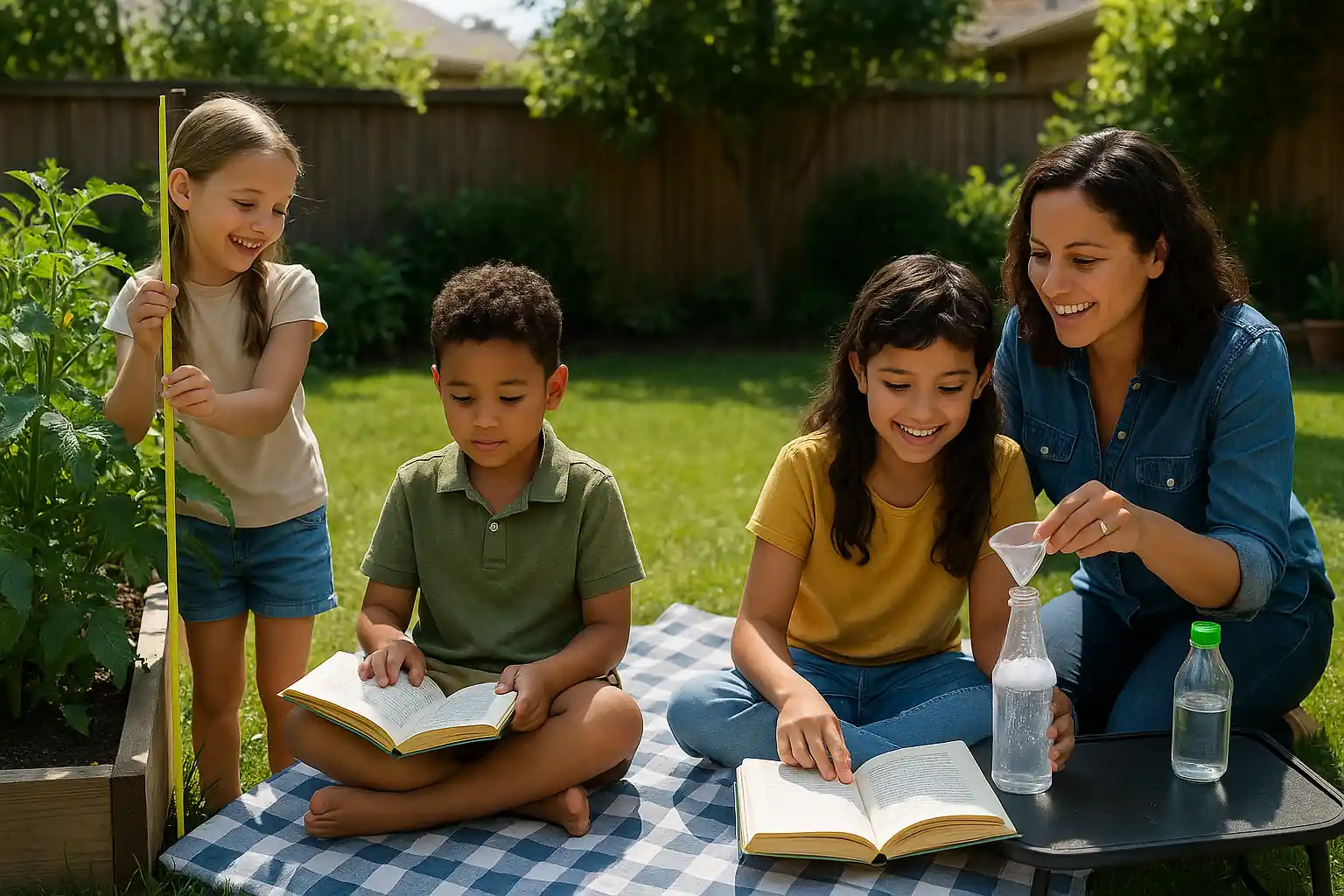
Summer Activities for Kids: The Complete Guide for Grades 3-8
Research shows 70% of kids lose math skills over summer. These 10 hands-on activities use household items to prevent summer slide, no worksheets required.
Read Article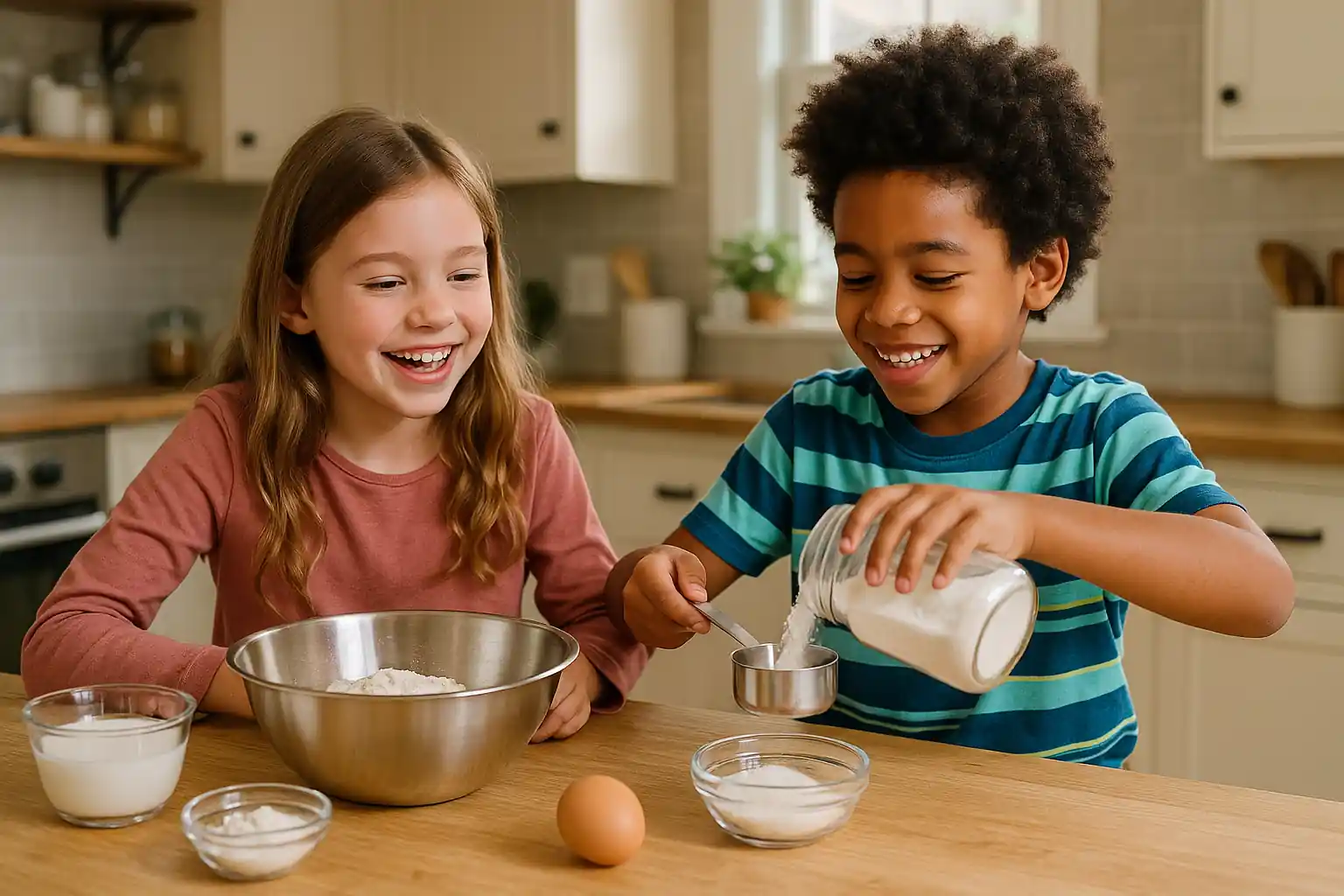
How to Choose the Best Math Activity for Your Child's Energy
Discover fun math activities tailored to your child's energy and interests during school breaks. Boost learning with scavenger hunts and kitchen cooking math.
Read Article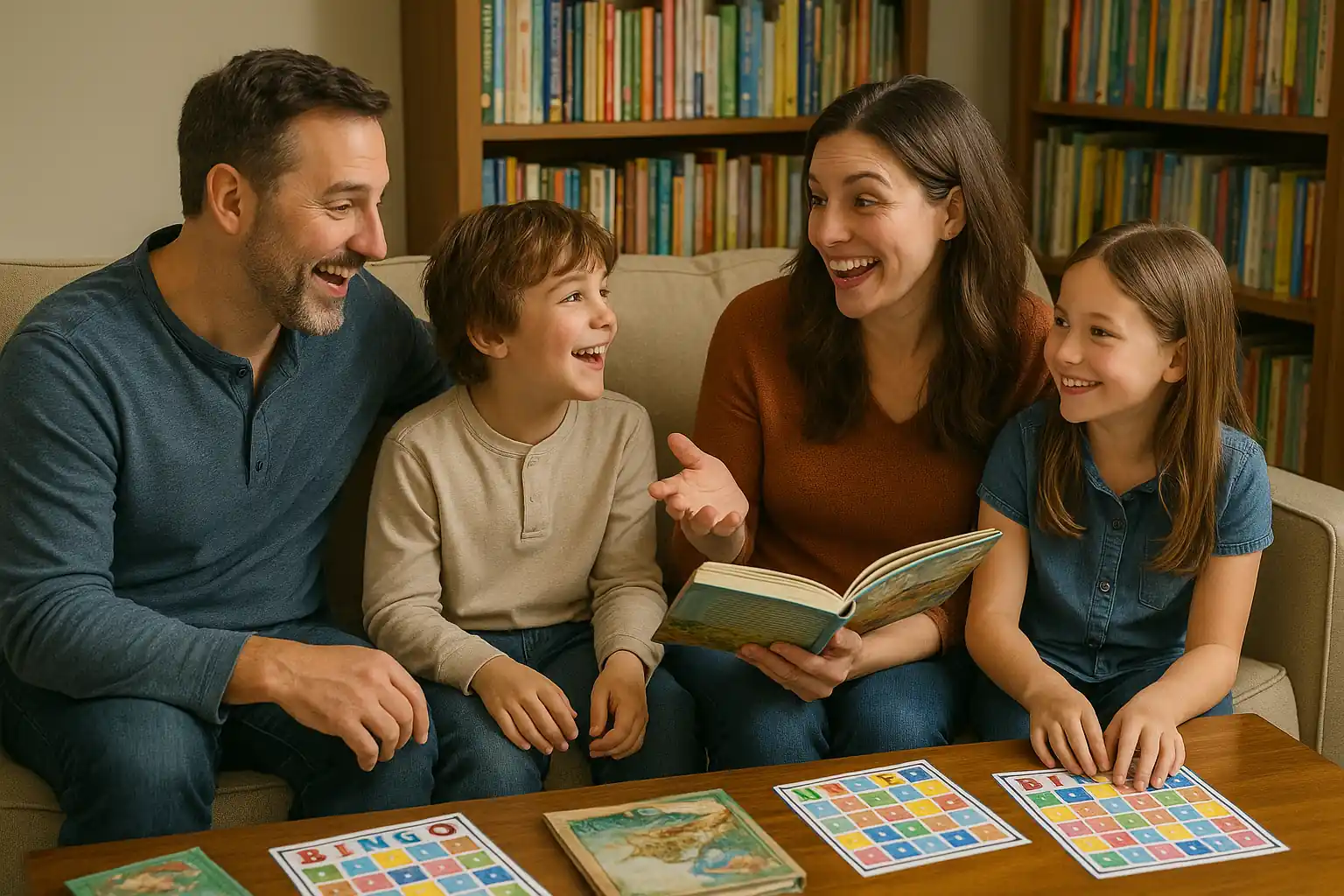
Summer Reading Bingo and Family Book Club Ideas for Grades 3-8
Engage kids with Summer Reading Bingo and Family Book Club ideas. Perfect for grades 3-8, blending fun reading challenges with meaningful family discussions.
Read Article
Science Summer Activities: Ice Cream and Nature Explorers for Grades 3-8
Discover two engaging science activities that blend learning with fun: make ice cream while exploring states of matter, and become backyard nature explorers with a journal and scavenger hunt.
Read Article
One-Paragraph Writing Routine for Kids: Scaffold, Timer, Plan
One-paragraph writing routine that teaches a four-sentence scaffold, a ten-minute timer, and a 3-step planning method to build writing fluency for grades 3-8. Use short daily steps to track progress.
Read ArticleShare this article